Aurora Expeditions Installs Microfiber Filters on Douglas Mawson
As polar tourism grows, pressure is rising for ships to tackle the small, invisible pollutants they leave behind. Laundry microfiber capture could become a new standard for expedition fleets.
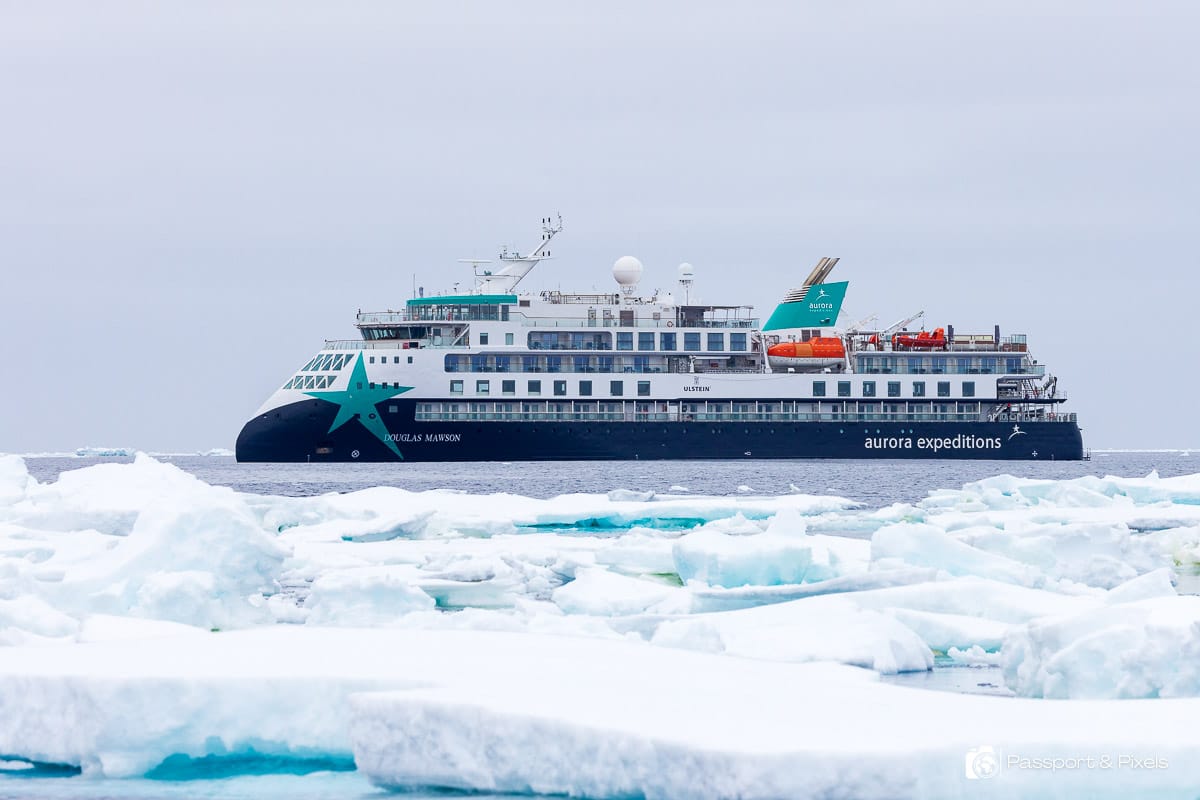
Aurora Expeditions is adding microfiber filtration technology to the laundry systems on its new expedition ship, Douglas Mawson, through a partnership with UK environmental technology start-up Cleaner Seas Group, aiming to curb microplastic pollution by capturing synthetic fibers before they can discharge through the vessel’s greywater system during the Antarctic season.
The laundry-focused project is one of several sustainability initiatives Aurora has outlined for the ship, alongside an AI-powered navigation collaboration with Australian climate-technology company CounterCurrent that is intended to support safer, more efficient polar operations and contribute data to broader climate and weather modeling.
Microfiber filtration to reduce greywater plastic discharge
Ahead of Douglas Mawson’s Antarctic operations, Aurora said it will install Indikon marine-grade microfiber filtration systems on the ship’s washing machines. Cleaner Seas Group developed the filtration technology to target microfibers shed from synthetic clothing and textiles during laundry cycles.
Aurora said the Indikon filters can capture up to 99 percent of microfibers released during washing, positioning the installation as a preventive step in remote and environmentally sensitive regions where expedition ships operate. The company has also noted that a single synthetic laundry load can shed hundreds of thousands of fibers.
Sasha Buch, sustainability manager at Aurora Expeditions, said microfiber waste is widespread across the oceans: “Microfiber pollution is one of the most overlooked forms of plastic waste, often invisible, yet pervasive from coastlines to the poles.” Buch added, “By installing Cleaner Seas’ filtration systems aboard the Douglas Mawson, we’re taking a proactive step to keep microplastics out of some of the most pristine waters on Earth.”
What the Cleaner Seas Group partnership includes
- Installation of Indikon microfiber filters on Douglas Mawson washing machines ahead of the Antarctic season, designed to capture fibers before they can exit via the ship’s greywater system.
- A post-use collection process for used filter cartridges, with Cleaner Seas Group planning to recycle the captured material locally through a closed-loop model intended to keep it out of landfill.
- A staged rollout approach: after a trial period aboard Douglas Mawson, Aurora has said it plans to expand the filtration technology to Sylvia Earle and Greg Mortimer when they return to Europe in 2024, a timeframe the company also described as “next year” in outlining its broader deployment plan.
Closed-loop recycling and New Zealand facility plans
Aurora said the filtration effort is designed to avoid shifting the problem from sea to shore. Under Cleaner Seas Group’s closed-loop approach, used cartridges would be collected and recycled locally, with the intent of ensuring that removing microfibers from wastewater does not create a separate disposal challenge on land.
David Miller, CEO of Cleaner Seas Group, said the company plans to turn collected microfibers into new materials and tied the ship partnership to regional infrastructure plans. “Building on our global growth, Cleaner Seas Group is set to establish a dedicated recycling facility in New Zealand in the near future,” Miller said.
Polar observations underscore why the company is focusing on microfibers
Aurora has linked the project to evidence that microplastics are present even far from population centers. Polar sailor and Aurora special guest Lisa Blair collected 180 microplastic samples during her 2022 circumnavigation of Antarctica and said her highest concentrations were in waters below Australia, the region where Aurora said Douglas Mawson will operate.
Blair emphasized that contamination is not limited to heavily trafficked routes. “Even in the most remote places on Earth, microplastics are present,” she said. “Stopping fibers at the source matters.”
Aurora has also highlighted the potential pathway through marine ecosystems: once in the ocean, the company said, microfibers can be ingested by plankton and other marine life, potentially moving pollutants through the food chain.
AI-enabled routing and data collection planned for the 2025–2026 Antarctic season
Alongside the filtration initiative, Aurora has announced a collaboration with CounterCurrent to implement an AI-powered navigation system aboard Douglas Mawson. The ship is scheduled to debut in December 2025 and will feature a CounterCurrent sensor throughout the 2025–2026 Antarctic season to collect real-time wind, wave, and ocean-current data.
Aurora said the system combines onboard sensors, satellite data, and AI to generate hyper-local route predictions and provide vessel-specific routing suggestions by analyzing ocean conditions and ship performance. In a company press release, Aurora said the data gathered by the sensor will be integrated into global climate and weather models, with the broader aim of improving forecasting accuracy while promoting safer, low-emission shipping practices.
Buch framed the partnership as a response to limited information in high-latitude waters: “In polar regions, real-time data is scarce. Through this collaboration, we aim to fill critical data gaps in the Southern Ocean and contribute to smarter, cleaner maritime travel.” Aurora has said it expects the technology to help vessels harness ocean currents, reduce emissions, lower operational costs, and enhance overall safety in challenging polar conditions.
Rollout timing and what to watch next
Aurora has positioned Douglas Mawson as the first platform for the filtration rollout, with the near-term operational focus on installing the onboard systems and establishing the logistics for used cartridge collection and recycling.
Beyond Douglas Mawson, Aurora has said it plans to extend the microfiber filtration systems to Sylvia Earle and Greg Mortimer when those vessels return to Europe in 2024. For the CounterCurrent collaboration, Aurora has said Douglas Mawson will carry the sensor through the 2025–2026 Antarctic season after the ship’s scheduled debut in December 2025, adding a research-oriented layer to the company’s operational sustainability program.
Frequently Asked Questions (FAQs)
How does CounterCurrent's AI navigation system work?
Aurora Expeditions said the system combines onboard sensors, satellite data, and AI to analyze wind, wave, and current patterns and generate hyper-local route predictions. The company said it is intended to support vessel-specific routing suggestions that improve efficiency and safety, and that collected data will be integrated into global climate and weather models.
What are Indikon microfiber filters, and how do they reduce plastic pollution?
Indikon is a marine-grade microfiber filtration system developed by Cleaner Seas Group for washing machines. Aurora Expeditions said the filters can capture up to 99 percent of microfibers released during laundry cycles, preventing them from entering the ocean through the ship’s greywater system.
What happens to the microfibers captured by the filters?
Cleaner Seas Group’s closed-loop model includes collecting used filter cartridges and recycling the captured material locally, with the aim of keeping it out of landfill. Cleaner Seas Group CEO David Miller has also said the company plans to turn collected microfibers into new materials and intends to establish a dedicated recycling facility in New Zealand in the near future.
Will Aurora Expeditions add the filters to other ships besides Douglas Mawson?
Yes. Aurora Expeditions has said that after a trial period aboard Douglas Mawson, it plans to expand the microfiber filtration technology to Sylvia Earle and Greg Mortimer when they return to Europe in 2024, a rollout schedule the company also described as “next year” in outlining its broader deployment plan.