ASENAV Floats Out Antarctica21’s Magellan Discoverer in Chile
As polar tourism faces tighter scrutiny, Antarctica21’s new hybrid ship underscores how operators are betting on quieter, lower-emission designs to keep Antarctica accessible.
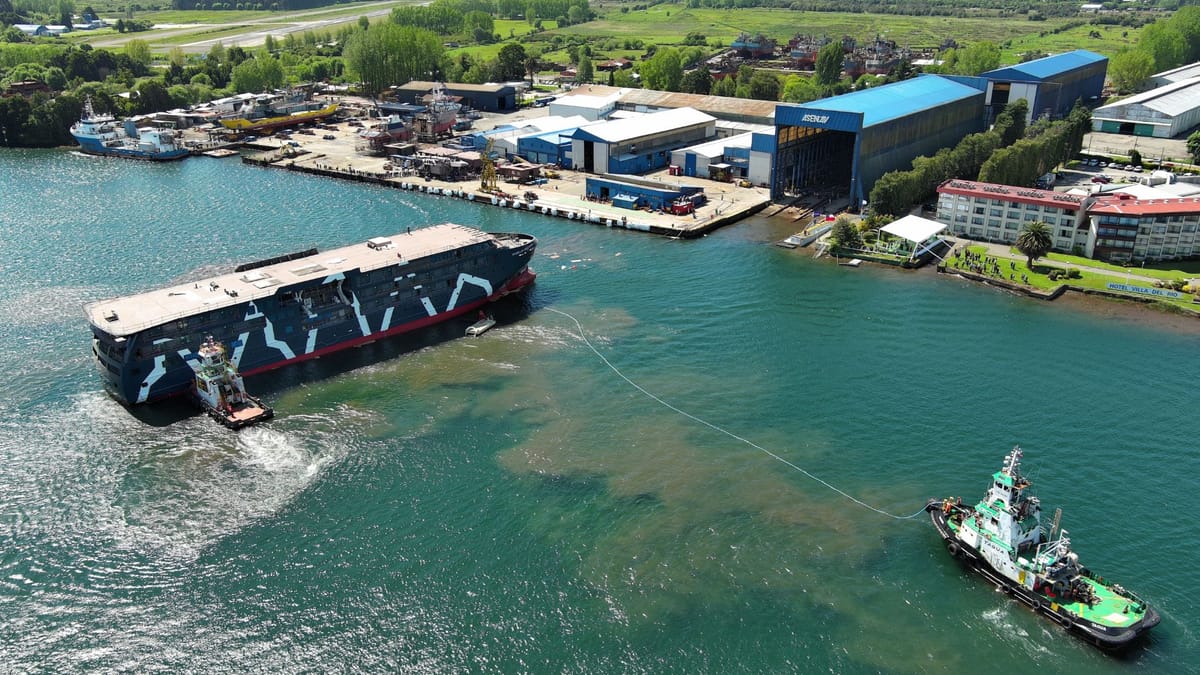
Chilean shipbuilder ASENAV and polar operator Antarctica21 marked the first float-out of their new expedition cruise ship, Magellan Discoverer, during a ceremony on the Calle Calle River in Valdivia, Chile. The milestone signals the 94-meter vessel has entered its final outfitting phase ahead of a planned 2026 debut.
Float-out in Valdivia moves Magellan Discoverer into final outfitting
ASENAV said national and regional authorities attended the Valdivia event alongside company representatives. The float-out was the first time the ship touched the water, a key step between hull construction and commissioning.
Fernando Rodríguez, General Manager of ASENAV, tied the build to lower-impact ship design. “This vessel marks a significant leap in sustainable engineering,” Rodríguez said.
Antarctica21 President Jaime Vásquez described the ship as central to the operator’s long-term approach in Antarctica. “With the launch of the Magellan Discoverer, we reaffirm our commitment to sustainable Antarctic tourism,” Vásquez said, adding that the project reflects “Chilean talent” and collaboration with ASENAV.
Construction timeline, workforce, and what happens before delivery
ASENAV reported that construction began with steel cutting in February 2024. The shipyard said it completed about 90 percent of the vessel’s structure in 624 days, involving more than 500 people across shipyard staff and contractors.
With the hull now afloat, the project is moving through interior outfitting and the installation of major onboard systems, including navigation equipment. ASENAV said the build program will then shift to technical trials before maritime certification.
Project schedules call for delivery in September 2026, with entry into service planned for November 2026.
Ship dimensions, capacity, and the fly-cruise operating model
ASENAV lists Magellan Discoverer at 94 meters in length with a 17-meter beam and a height of 30 meters. The vessel is designed with a 4.3-meter draft and is specified for a 14-knot speed in open water.
The ship is built to accommodate up to 96 passengers and 67 crew members. Antarctica21 said that, in its fly-cruise program, sailings will be capped at up to 76 passengers, below the ship’s maximum capacity.
Public areas and accommodations are designed around small-ship expedition cruising. ASENAV and Antarctica21 said all cabins are planned to include private balconies, with shipboard spaces set to include a panoramic lounge, dining facilities, a sauna, an outdoor barbecue deck, and a science lab.
Hybrid-electric propulsion and polar certification
ASENAV and Antarctica21 are positioning Magellan Discoverer as a technologically advanced expedition vessel built around a hybrid-electric propulsion concept intended to improve operational efficiency and reduce emissions and noise.
ASENAV said the ship will use MAN engines totaling 4,800 ekW of power paired with two ABB Azipods for propulsion and maneuvering, along with a Corvus energy storage system using marine-grade lithium batteries and onboard power management. Separate project details have also described the hybrid diesel-electric configuration as including two 1,800 kW engines.
For Antarctic and high-latitude itineraries, the vessel is designed to comply with the Polar Code and is classified as Polar Class 6 by Lloyd’s Register, with a PC6 ice-class hull.
Built in Chile, following Magellan Explorer
Magellan Discoverer is the second ship ASENAV has built for Antarctica21, following Magellan Explorer, which entered service in 2019. Like Magellan Explorer, Magellan Discoverer is planned to be registered in the Bahamas.
Another low-emission expedition project: Captain Arctic
Separately, SELAR’s expedition ship Captain Arctic has also reached a key construction stage, completing its hull float-out and moving into outfitting at Chantier Naval de l’Océan Indien (CNOI) shipyard in Mauritius. The 70-meter vessel is scheduled to launch cruises in 2027.
Captain Arctic is designed around a near-zero-emission concept that includes five aluminum rigid sails with integrated solar panels, a configuration SELAR says can reduce carbon dioxide emissions by up to 90 percent compared with conventional vessels. The ship’s systems also include hydro turbines driven by its dual propeller shafts, reverse osmosis water production, and recycled wooden waste pellets used as fuel for a pellet boiler.
SELAR’s plans call for an intimate onboard experience, with capacity for 36 passengers and a crew of 24, and itineraries focused on the Arctic Circle, including skiing adventures in Norway’s Viking fjords and cruises to Greenland. The ship’s Arctic Circle routes are expected to include Norway’s Viking fjords, Svalbard, and Greenland, with itineraries determined by weather and ice conditions.
For ASENAV and Antarctica21, the next major checkpoints for Magellan Discoverer are system integration, trials, and certification, as the shipyard works toward the September 2026 delivery target and the operator’s planned entry into service in November 2026.
Frequently Asked Questions (FAQs)
When will Magellan Discoverer be delivered and start operating?
Project schedules call for delivery in September 2026, with entry into service planned for November 2026.
How many passengers will Magellan Discoverer carry?
The ship is built for up to 96 passengers, but Antarctica21 said it will limit its fly-cruise operations to up to 76 passengers per voyage.
What makes Captain Arctic’s design lower-emission than conventional ships?
Captain Arctic is designed with five aluminum rigid sails with integrated solar panels that SELAR says can reduce carbon dioxide emissions by up to 90 percent compared to conventional vessels. The ship also features hydro turbines from its dual propeller shafts, reverse osmosis water production, and recycled wooden waste pellets used as fuel for a pellet boiler.
What destinations will Captain Arctic visit?
Captain Arctic is planned for environmentally conscious itineraries through the Arctic Circle, including Norway’s Viking fjords, Svalbard, and Greenland, with routes determined by weather and ice conditions. SELAR has also highlighted skiing adventures in Norway’s Viking fjords and cruises to Greenland.