Arizona Resident Assessed After MV Hondius Hantavirus Outbreak
MV Hondius carried eighty-six passengers and sixty-one crew from twenty-three countries on a South Atlantic voyage that began April 1 in Ushuaia, Argentina.
Updated May 31, 2026
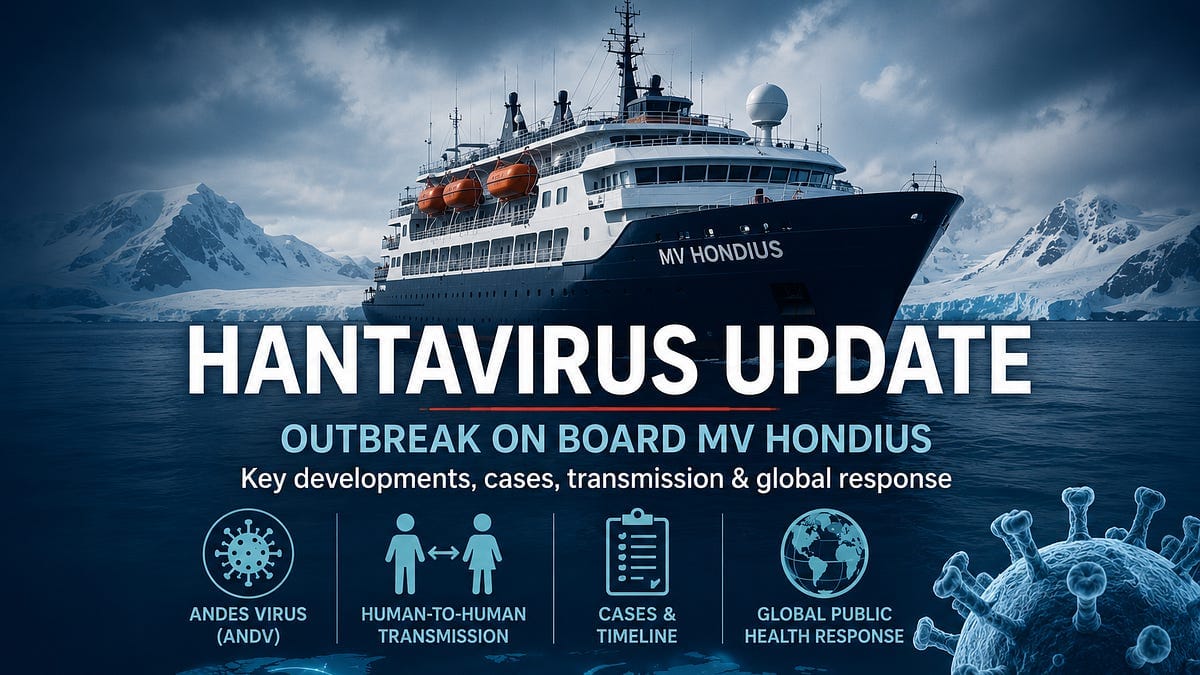
MV Hondius has docked in Rotterdam for quarantine, disinfection and inspection after its passengers disembarked in Tenerife, shifting the deadly Andes hantavirus outbreak from an at-sea evacuation to post-voyage monitoring across several countries.
The Oceanwide Expeditions-operated vessel reached the Dutch port with 25 crew members and two medical personnel still aboard, according to Dutch health officials and Associated Press reporting. The crew was to enter quarantine, and officials said none of the people coming off the ship were showing symptoms. The outbreak has reached at least 11 cases, including three deaths, after Canadian health officials reported that a passenger tested positive.
Rotterdam begins crew quarantine and ship cleaning
Yvonne van Duijnhoven, director of public health in Rotterdam, told the Associated Press, "Luckily so far the crew has suffered no symptoms." Crew members were to be tested on arrival and weekly during quarantine. Those who cannot be immediately repatriated are expected to quarantine in units set up near the vessel, while Dutch crew members may quarantine at home.
After everyone has disembarked, MV Hondius will be decontaminated under Dutch public health guidelines. Van Duijnhoven said the process would take about three days. Reuters, citing the Dutch National Institute for Public Health and the Environment, reported that cleaning by a specialized company could take up to a week and include all surfaces, ventilation systems and individual cabin assessments. Public health officials will inspect the vessel before it is cleared to sail again.
"We have very strict protocols to prevent virus going from the ship towards the outside world," van Duijnhoven said. Tjalling Leenstra, head of the Dutch coordination center for communicable disease control at the Dutch public health institute, told Reuters, "There is no risk for Rotterdam and no risk in that sense."
U.S. passengers now monitored in Nebraska
Eighteen people from the U.S. passenger group were flown from the Canary Islands to the United States after disembarking the ship in Tenerife. Sixteen initially went to the National Quarantine Unit in Omaha, while two others continued to Emory University in Atlanta, including one symptomatic passenger and that passenger's partner.
The two passengers who had been at Emory were later transferred to the National Quarantine Unit after being medically cleared, bringing the Omaha total to 18, the University of Nebraska Medical Center said. The symptomatic passenger tested negative for hantavirus, according to the U.S. Department of Health and Human Services. An American initially described as having a mild PCR-positive result later tested negative at least twice and remained asymptomatic. No confirmed U.S. hantavirus cases had been identified.
The U.S. travelers include two Arizona residents. The Arizona Department of Health Services said May 12 that one resident from the ship was being assessed at the National Quarantine Unit and that a second resident was already home under monitoring by the Maricopa County Department of Public Health. The department did not identify the Nebraska passenger's Arizona community.
Case count and public risk
The World Health Organization had reported 10 cases, including eight confirmed and two probable, as of May 15, with three deaths. Associated Press reporting after the Canadian case put the outbreak at at least 11 cases, nine of them confirmed by the WHO.
The Andes strain is the only hantavirus known to spread person to person, though health officials say transmission is rare and generally linked to prolonged close contact with someone who is actively ill. France's Pasteur Institute said it fully sequenced the Andes virus detected in a French passenger from MV Hondius and found that it matched viruses already known in South America, with no evidence so far of new characteristics that would make it more transmissible or more dangerous.
WHO Director-General Dr. Tedros Adhanom Ghebreyesus said earlier there was "no sign we are seeing the start of a larger outbreak," while cautioning that the "situation could change" if more cases are detected during monitoring. During the Tenerife evacuation, he also said, "This is not another COVID. And the risk to the public is low. So they should not be scared, and they should not panic."
Arizona's usual hantavirus risk is different. The state's most common strain is Sin Nombre, carried by deer mice, and it is not known to spread between people.
Remote itinerary and contact tracing
MV Hondius departed Ushuaia, Argentina, on April 1 with 86 passengers and 61 crew from 23 countries. Its South Atlantic voyage included calls at Antarctica, South Georgia Island, Tristan da Cunha, Saint Helena and Ascension Island, according to the U.S. Centers for Disease Control and Prevention.
Some travelers left the voyage before the outbreak was recognized. The remaining passengers were repatriated after the ship reached Tenerife, and health authorities in several countries have been tracing passengers, crew and close contacts because symptoms can appear days or weeks after exposure.
State and local health departments are using daily checks through a period of up to 42 days, the outer incubation window cited for the outbreak. Australia took five Australian passengers and one New Zealand citizen to the Bullsbrook quarantine facility in Western Australia for a quarantine expected to last at least three weeks, Health Minister Mark Butler said.
Hantavirus infections can begin with fever, fatigue, muscle aches, headache, nausea, vomiting or diarrhea. Severe cases may progress to coughing, shortness of breath or respiratory distress requiring hospitalization.