Stowaway Owls From Royal Caribbean Cruise Released Back in Florida
The owls’ detour underscores how modern travel can unintentionally move protected species across borders, putting quarantine rules and global wildlife networks to the test.
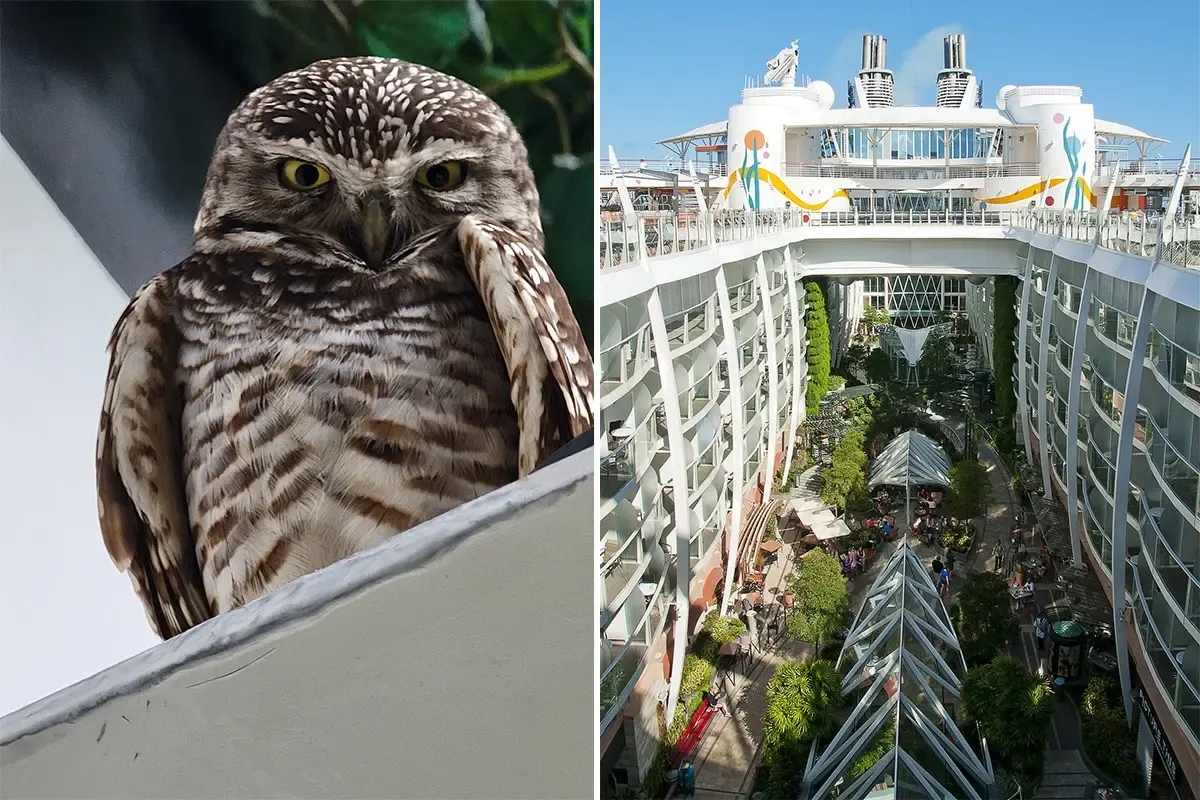
Two burrowing owls that accidentally traveled from Florida to Spain aboard a Royal Caribbean cruise ship have been released back into the wild after an international recovery effort and months of quarantine. The owls, Benito and Concho, were released March 12 at Dinner Island Ranch Wildlife Management Area in Florida.
The pair was discovered last year on Allure of the Seas after the ship departed PortMiami in February 2025, setting off a chain of coordination involving U.S. and Spanish wildlife officials because burrowing owls are a protected species.
Spotted aboard Allure of the Seas after leaving Miami
Passengers and crew reported seeing the owls in the ship’s open-air Central Park, a densely landscaped area on the 18-deck vessel. At least one of the birds also made its way into the adults-only Solarium Lounge.
The sightings became a recurring topic among travelers, including on Reddit, where one commenter joked that the vessel should be called the “Owllure of the Seas.” Royal Caribbean declined to comment on the incident.
According to an independent cruise blog cited in the reports, crew members safely captured the owls and fed them until the ship arrived in Spain.
Veterinary care in Toledo and a coordinated route back to Florida
After disembarking in Spain, Benito and Concho were taken to The Foundation for Research in Ethology and Biodiversity in Toledo, a facility that houses more than 300 animals and works to rehabilitate wildlife and, when possible, return animals to their countries of origin. Reports noted the organization also cares for some animals linked to illegal trafficking cases.
In a statement, the foundation said it focused on getting the owls ready for release while limiting their exposure to people: “From the moment these owls arrived at our facilities, our priority was to ensure their physical recovery while minimizing human imprinting, with the aim of enabling their return to their natural environment.”
Florida officials became aware of the situation after the U.S. Fish and Wildlife Service was contacted through the Convention on International Trade in Endangered Species (CITES) network. The owls returned to Florida in February, roughly a year after their accidental departure.
Agencies involved and why returns can be difficult
Because the birds are protected, their return required approvals, health checks, and cross-border logistics. The Florida Fish and Wildlife Conservation Commission said it stayed in contact as plans progressed to keep the owls safe and healthy, and the Fish & Wildlife Foundation of Florida helped fund travel for the owls’ return.
Madison Cole, avian conservation coordinator for the Florida Fish and Wildlife Conservation Commission, credited the multi-agency coordination: “We are happy to have our well-traveled owls back home and appreciate how our state, federal and international partners have worked together to make this a success.”
U.S. Fish and Wildlife Service policy specialist Dara Satterfield said accidental transport and illegal trafficking can both result in wildlife ending up outside its home jurisdiction, and that relatively few animals can be repatriated once moved across borders. “We collaborated with people from Spain, Florida, and Virginia,” Satterfield said, adding that the owls are now positioned to re-enter the wild.
- Florida Fish and Wildlife Conservation Commission (FWC): State agency that coordinated with partners and oversaw steps needed for the owls’ return and release in Florida.
- U.S. Fish and Wildlife Service (USFWS): Federal agency involved after being contacted through the CITES network and during the cross-border coordination.
- Convention on International Trade in Endangered Species (CITES): International framework used to connect authorities once the protected birds were identified abroad.
- The Foundation for Research in Ethology and Biodiversity (Toledo, Spain): Veterinary team that rehabilitated the owls and prepared them for return while minimizing habituation to people.
- Fish & Wildlife Foundation of Florida: Organization that helped fund the logistics of the owls’ travel back to Florida.
Quarantine, banding, and release away from cruise ports
After arriving back in Florida in February, Benito and Concho entered quarantine. Once the required health and regulatory steps were completed, biologists measured and banded the birds before release. Photos from the release also showed biologists digging a starter burrow to help the owls re-establish quickly.
The release site, Dinner Island Ranch Wildlife Management Area, is about 70 miles from the nearest cruise ship port. Officials described the location as more appropriate habitat for the species as the owls return to natural conditions.
Why the species is vulnerable and what habitat it seeks
Burrowing owls are designated as a threatened species in Florida and are protected under the federal Migratory Bird Treaty Act. The species is known for long legs and bright yellow eyes, and typically feeds on small animals such as insects, lizards, and rodents.
University of Florida wildlife specialist Hance Ellington said the birds prefer open areas with short grasses and low perches that support hunting. When natural burrows are not available, they can use burrows created by other animals or manmade structures such as PVC pipes.
How Benito and Concho got onto the ship remains unclear. Ellington has noted that, although burrowing owls are capable of long flights, they do not typically travel far over open water, and the birds were not noticed until the ship was already underway.
Other owl stowaway incidents on cruise ships
Wildlife officials say the case is unusual, but burrowing owls have appeared on cruise ships before, including Royal Caribbean vessels.
- 2023: A burrowing owl was found aboard Symphony of the Seas after a sailing to Mexico and was captured when the ship returned to Miami. The bird was described as thin but not injured.
- 2010: A burrowing owl was discovered on a Royal Caribbean ship near a miniature golf course and was captured before the cruise departed.
Ellington has said finding two owls aboard a ship is more surprising than a single bird, given the species’ typical behavior and habitat preferences. With Benito and Concho now released after quarantine, officials will rely on the owls’ ability to re-adapt to Florida’s conditions following an unusually long detour abroad.
Frequently Asked Questions (FAQs)
Where were Benito and Concho released in Florida?
The owls were released March 12 at Dinner Island Ranch Wildlife Management Area, about 70 miles from the nearest cruise ship port.
Why did the owls have to go through quarantine?
After returning to Florida in February, the owls entered quarantine to ensure they were healthy and to clear required regulatory steps tied to international movement of protected wildlife before they were deemed ready for release.
How were Benito and Concho cared for during their time in Spain?
They were cared for by veterinarians at The Foundation for Research in Ethology and Biodiversity in Toledo. The organization said it prioritized physical recovery while minimizing human imprinting to support a successful return to the wild.
Why are burrowing owls attracted to cruise ships?
Hance Ellington has said the species seeks open areas with short grasses and low perches for hunting, conditions that can be mimicked by landscaped spaces. Reports also noted the owls were frequently seen in the ship’s open-air Central Park area.
Did Royal Caribbean explain how the owls got on the ship?
No. Royal Caribbean declined to comment, and officials have said it is unclear how the owls boarded the ship before it departed Miami.