Oceanwide Signs LOI for Two Hybrid Sail Polar Expedition Ships
As expedition cruising faces tighter emissions scrutiny, Oceanwide is betting wind-assisted hybrid ships can keep polar travel small and authentic while cutting impact.
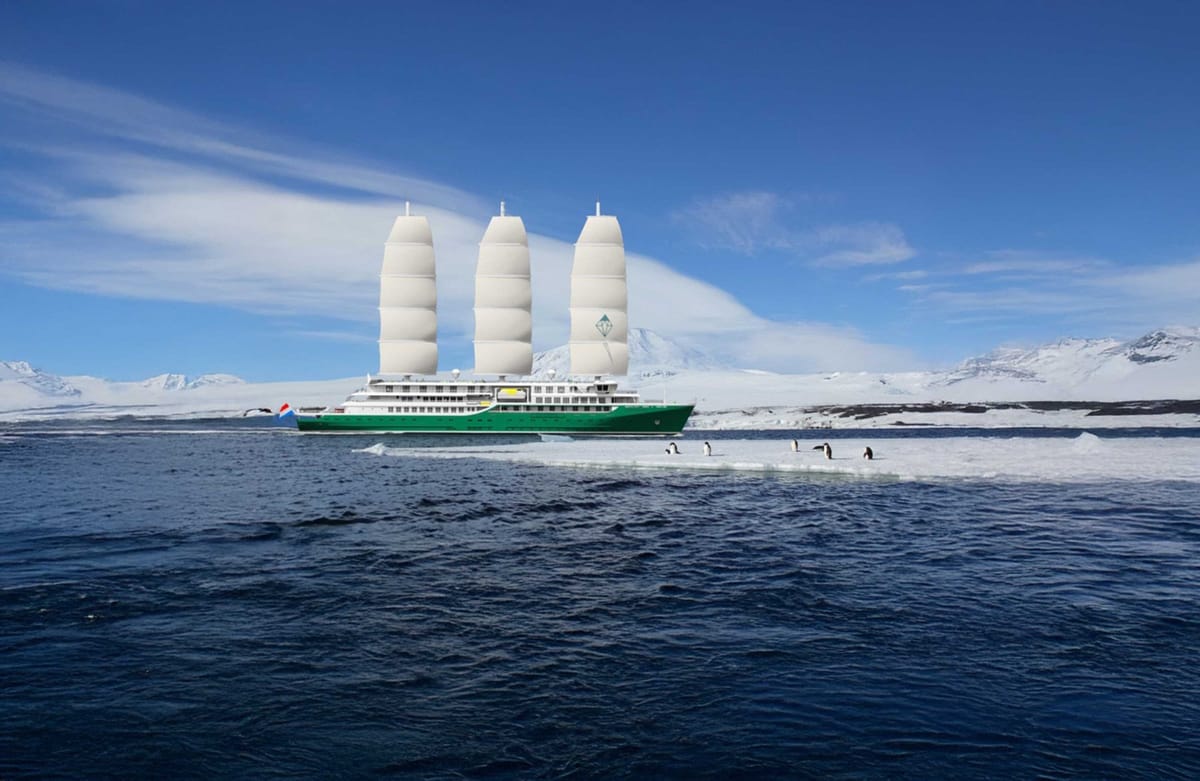
Oceanwide Expeditions has signed a letter of intent to build two new eco-sail expedition vessels that the company says will use hybrid sail propulsion to reduce fuel consumption and lower operational emissions. The Dutch polar operator is targeting a 2029 debut for the first ship and 2030 for the second, with each vessel designed to accommodate 146 passengers.
CEO Rémi Bouysset linked the newbuild plan to Oceanwide’s long-standing positioning in expedition cruising. “Sailing has been part of our DNA from the start,” Bouysset said, adding that the ships will integrate “modern sustainability features” and “hybrid propulsion.”
Financing secured, commercialization planned for 2027
Oceanwide said the letter of intent secures financing for the two-ship program and allows the project to move forward toward contract finalization. The company said it is now in contract finalization with a shipyard on an exclusive basis, but has not disclosed the yard.
Commercial marketing for both vessels is expected to begin in early 2027, ahead of the first ship’s planned entry into service in 2029.
- Early 2027 commercialization: Oceanwide expects to begin selling and marketing itineraries for both eco-sail ships in early 2027, ahead of delivery.
- First ship targeted for 2029: The first of the two newbuilds is expected to enter service in 2029, based on the timeline shared by the operator.
- Second ship targeted for 2030: A second vessel is planned to follow in 2030, giving Oceanwide a two-ship rollout for the program.
Hybrid sail propulsion, wind-assisted capability, and a smaller footprint
Oceanwide said both ships will use hybrid sail propulsion systems designed to cut fuel use and reduce operational emissions, combining wind-assisted capability with hybrid systems. The company has also pointed to additional sustainability-focused features, but said more specifics will be shared later as design and construction planning progresses.
Bouysset described the concept as an evolution of the company’s expedition style. “These eco-sail vessels will integrate modern sustainability features, hybrid propulsion and a smaller footprint into the same authentic, immersive Oceanwide guest experience,” he said.
Design direction draws from Hondius-class, with details still pending
Oceanwide characterized the eco-sail vessels as an iteration of its award-winning Hondius-class direction, with upgrades intended to enhance both vessel operations and the onboard guest experience. Hondius entered service in 2019 and is the basis Oceanwide cited for the new design approach.
Initial renderings released by the company show ships with three prominent masts. Oceanwide emphasized that the images are illustrative and could change as the project develops.
Key specifics remain unannounced, including the shipyard partner, the vessels’ names, and detailed technical specifications. Oceanwide said it plans to share additional information in the coming weeks and months, as well as as the construction timeline advances.
How the eco-sail ships fit into Oceanwide’s fleet and build pipeline
The two newbuilds are slated to join a fleet that includes the ice-class vessels Plancius and Ortelius, as well as Hondius. Oceanwide also operates the three-masted schooner Rembrandt van Rijn for expedition cruising in regions such as Greenland and Spitsbergen.
Oceanwide’s longer-term build picture also includes Janssonius, a sister ship to Hondius that remains under construction at Brodosplit shipyard in Croatia after delays from its originally planned 2021 launch timeframe. Oceanwide has said it has stayed engaged on the vessel despite the extended timeline, and has also cited financial challenges at the Brodosplit shipyard as a factor in the delay.
Industry context: sustainability focus intensifies across expedition cruising
Oceanwide’s eco-sail project comes as more operators highlight sustainability initiatives in expedition cruising. Bouysset said, “The future will be shaped by sustainability,” pointing to “new fuels, hybrid propulsion, smarter itineraries and a stronger focus on education.”
In discussing the segment’s evolution, Bouysset also stressed Oceanwide’s small-ship positioning as expedition cruising becomes more visible and larger ships enter the market. “These projects are part of our long-term vision to remain small, flexible and responsible,” he said. “But there will always be a place for small, authentic expeditions, and that is where Oceanwide belongs.”
Oceanwide’s announcement also sits alongside other industry efforts referenced in the company’s broader discussion of sustainability-focused ship concepts, including proposals from Hurtigruten and Ponant involving technologies such as sails, fuel cells, and carbon capture technology. Elsewhere, Atlas Ocean Voyages has unveiled plans for a 26,000 gross ton sail-assisted ship accommodating 400 guests, and Orient Express is preparing for the launch of Orient Express Corinthian.
What to watch next
With commercialization expected to start in early 2027 and the first ship targeted for 2029, Oceanwide said upcoming milestones are expected to center on a finalized shipbuilding contract and further technical disclosures on how the hybrid sail propulsion and other sustainability features will be implemented at sea.
Frequently Asked Questions (FAQs)
When will Oceanwide Expeditions’ eco-sail ships enter service?
Oceanwide has said the first vessel is expected to enter service in 2029, with the second planned for 2030.
How many passengers will the new eco-sail expedition ships carry?
Oceanwide said each of the two newbuilds will be designed to accommodate 146 passengers.
When will Oceanwide begin selling these new ships’ itineraries?
The company expects to begin commercializing both vessels by early 2027.
How will the hybrid propulsion systems work?
Oceanwide said the ships will combine wind-assisted sails with hybrid systems to reduce fuel consumption and lower operational emissions while maintaining operational reliability.
How do these ships differ from Oceanwide’s existing fleet?
Oceanwide has described the eco-sail vessels as an evolution of its Hondius-class direction, with upgrades aimed at improving operational efficiency and the guest experience, alongside added sustainability features such as wind-assisted capability and hybrid propulsion. The company has not yet released a full feature-by-feature technical breakdown.