Norwegian Cruise Line Shares Sink on Weak 2026 EPS Forecast
Norwegian’s reset underscores how quickly the cruise boom is giving way to a capacity fight in the Caribbean, where timing missteps can erase pricing power and invite activists.
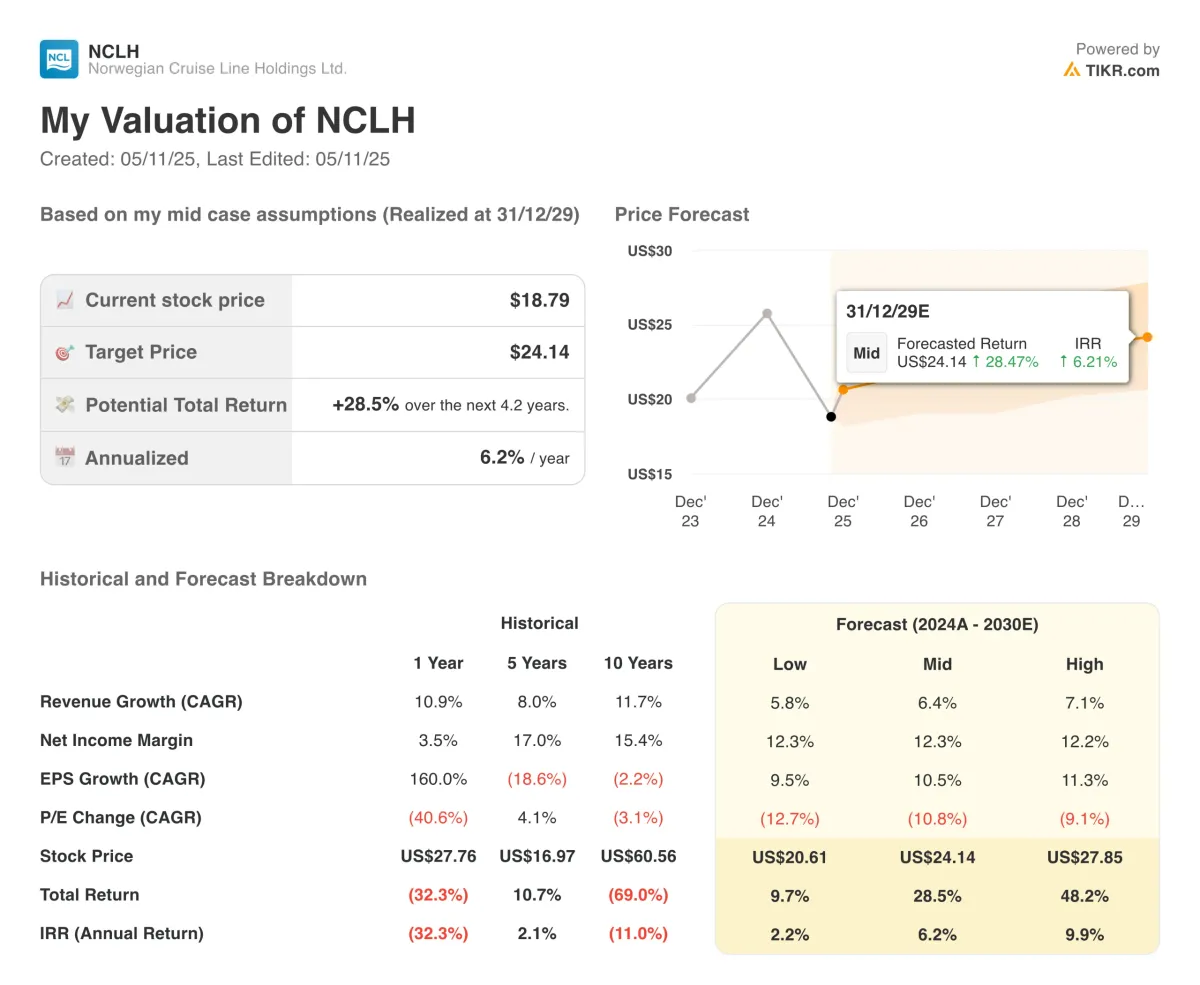
Norwegian Cruise Line Holdings (NCLH) projected 2026 adjusted earnings per share of $2.38, a forecast that came in below analysts’ expectations of $2.55 as the company pointed to execution missteps and a less certain fuel-cost backdrop.
In early trading on March 2, NCLH shares fell about 11%. Peer cruise stocks also declined, with Carnival Corp down about 10% and Royal Caribbean down around 6% in a session that also reflected a broader equity selloff.
2026 targets reset as management cites flat yields and a softer start to the year
NCLH said it expects annual net yield, a measure of profit per passenger after certain costs, to be approximately flat in 2026 versus 2025 as it works through what executives described as self-inflicted execution gaps. For the first quarter of 2026, the company expects net yield (constant currency) to decline about 1.6% year over year, tying the pressure to how it handled a rapid Caribbean capacity increase and the timing of destination amenities.
The company also replaced previously communicated long-term targets with updated 2026 expectations that include:
- Adjusted EBITDA: Approximately $2.95 billion
- Adjusted operational EBITDA margin: Approximately 37%
- Adjusted net income: Approximately $1.12 billion
- Net leverage: Expected to end 2026 at about 5.2x (after ending 2025 at 5.3x)
Caribbean deployment and Great Stirrup Cay timing emerge as central execution issues
Executives said a 40% year-over-year increase in Caribbean capacity is weighing on early 2026 results, describing the expansion as poorly aligned with commercial planning and the readiness of the “full slate of amenities” at Great Stirrup Cay, the company’s private island destination.
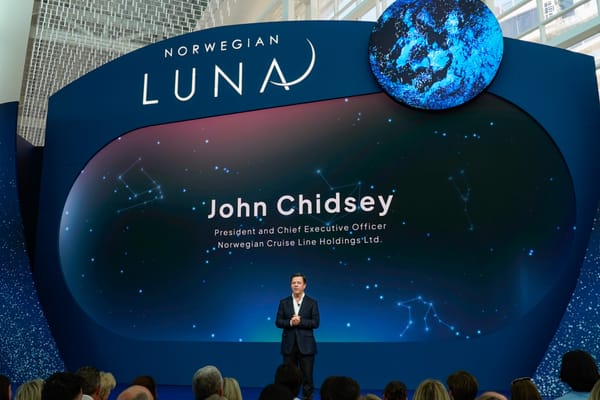
New Chief Executive Officer John W. Chidsey said coordination across teams did not keep pace with the operational shift. “My initial assessment is that our strategy is sound, but execution and cross-functional alignment have fallen short,” Chidsey said.
He also described a siloed approach as the Caribbean ramp-up accelerated, telling investors the company “got a little ahead of ourselves,” citing mismatched timing between marketing efforts and the island’s readiness.
Alaska, Europe, and a Philadelphia homeport rollout add pockets of pricing pressure
Beyond the Caribbean, Chief Financial Officer Mark A. Kempa said Alaska is seeing weaker pricing as capacity increases across the industry. “We are seeing softness in Alaska,” Kempa said, adding that mid-single-digit industry capacity growth is weighing on pricing.
Kempa also said expected momentum in Europe did not materialize as the company anticipated, framing it as an internal execution issue rather than a broad shift in demand conditions. He additionally flagged itineraries tied to NCLH’s new homeport of Philadelphia as another area contributing to pricing pressure.
Fuel-market volatility clouds cost planning, even without itinerary changes
NCLH executives said the longer-term impact of current conflicts on fuel costs is uncertain. The company’s disclosed fuel price per metric ton rose to $662 in 2025 from $641 a year earlier, and is expected to increase again to $670 in 2026.
NCLH said it is not currently operating in affected areas of the Middle East and does not anticipate itinerary impacts, but it is monitoring the situation closely.
2025 results show higher revenue and stronger adjusted profitability, with leverage still elevated
For full-year 2025, NCLH reported total revenue of $9.8 billion, up 3.7% versus 2024. GAAP net income was $423.2 million, compared with $910.3 million in the prior year, and earnings per share were $0.92.
On an adjusted basis, NCLH reported adjusted EBITDA of $2.73 billion (up 11% year over year) and adjusted EPS of $2.11 (up 19%). The company ended 2025 with total debt of $14.6 billion, net debt of $14.4 billion, and liquidity of $1.6 billion, including about $210 million of cash and cash equivalents and $1.4 billion available under a revolving loan facility.
For the fourth quarter of 2025, NCLH reported revenue of about $2.2 billion. Reuters also cited fourth-quarter revenue of $2.24 billion versus expectations of $2.35 billion, while adjusted earnings were 28 cents per share, ahead of forecasts of 26 cents.
Brand performance diverges, with luxury demand stronger than the Norwegian brand
NCLH said demand has been particularly strong at Regent Seven Seas Cruises and Oceania Cruises, which tend to benefit from longer booking curves. The company highlighted record booking activity around Oceania’s newest ship, Oceania Sonata, scheduled to debut in August 2027, and said Regent posted its strongest booking month in history in January.
At the same time, executives said the operational and commercial pressure is most pronounced at the contemporary Norwegian Cruise Line brand, the company’s largest, making its issues especially visible at the consolidated level.
NCLH also said its deployment shift is contributing to higher load factors. Occupancy reached 101.8% in the fourth quarter of 2025, and the company expects 2026 occupancy of 105.7%, compared with 103.5% in 2025.
Activist investor Elliott escalates governance demands as investors weigh accountability
The outlook arrived as activist investor Elliott Investment Management increases pressure after disclosing an ownership stake of more than 10% in February. Elliott has criticized what it calls “execution lapses” and has pushed for sweeping changes, including a comprehensive board refreshment and the appointment of leaders with cruise industry expertise.
In its “Norwegian Now” proposal, Elliott argued NCLH needs to sharpen strategy, strengthen cost controls, and rebuild credibility with shareholders. “The gap between Norwegian’s current performance and what it should achieve under capable leadership represents one of the clearest value-creation opportunities in the public markets,” the firm wrote in a letter to NCLH’s board.
After the March 2 earnings-related updates, Elliott issued a statement from Partner John Pike and Portfolio Manager Bobby Xu that renewed its criticism. “Norwegian’s disappointing outlook for 2026 falls meaningfully short of the company’s potential,” Pike and Xu said, adding that the earnings-call commentary reinforced “a troubling pattern of execution lapses and strategic missteps.”
Elliott has also raised concerns about leadership decisions, including the appointment of Chidsey, who previously served on NCLH’s board before becoming CEO. The firm has identified former Royal Caribbean executive Adam Goldstein as a potential board candidate and has said corrective action could lift Norwegian’s stock to as high as $56 per share, a 159% increase over recent levels. Elliott is pressing its case ahead of the company’s annual shareholder meeting in March.
Management’s response focuses on tighter coordination, technology, and cost discipline
Chidsey, who joined as CEO in February 2026 to replace Harry Sommer after previously leading Subway and Burger King, has described internal friction as a key obstacle. “Our priority is to act urgently to address these gaps by improving coordination, reinforcing accountability, and strengthening financial discipline across the organization,” he said.
Chidsey also pointed to underinvestment in technology, revenue management, and customer-facing systems, and said the company needs to cut bureaucracy to improve cohesion across teams.
Kempa told analysts the weakness is largely “self-inflicted wounds,” while emphasizing that demand has not been the core issue. “Overall, we’re not seeing issues with the consumer,” he said, as the company works to realign commercial strategy with operations and manage a cost environment influenced by fuel-market volatility and new ship deliveries.
With Elliott’s campaign set to intensify as the annual meeting approaches, investors will be watching for early signs that NCLH can stabilize near-term yields, better match Caribbean supply with demand, and deliver on its revised 2026 targets amid continued uncertainty in energy markets.
Frequently Asked Questions (FAQs)
What did Norwegian Cruise Line Holdings project for adjusted EPS in 2026?
NCLH projected 2026 adjusted earnings per share of $2.38, below the $2.55 analyst estimate cited by Reuters.
Why is NCLH expecting flat net yield for 2026 and a decline in first-quarter yield?
The company tied the outlook to execution issues, including a rapid Caribbean capacity increase that was not aligned with its commercial strategy and the timing of the “full slate of amenities” at Great Stirrup Cay. For the first quarter of 2026, NCLH said net yield (constant currency) is expected to decline about 1.6% year over year.
Is Norwegian changing itineraries because of Middle East conflict?
NCLH said it is not currently operating in affected areas of the Middle East and does not anticipate itinerary impacts, but it is monitoring the situation closely. Executives also said the longer-term effect of conflicts on fuel costs is uncertain.
What is Elliott Investment Management asking for at NCLH?
Elliott, which disclosed a stake of more than 10%, has called for a comprehensive refresh of NCLH’s board and has pushed for new independent directors with cruise and operational expertise. The firm has criticized what it describes as execution lapses and strategic missteps, and has urged changes it says would strengthen oversight and restore investor confidence.
What role might Adam Goldstein play in Norwegian’s future?
Elliott has identified Adam Goldstein, a former Royal Caribbean executive, as a potential candidate for NCLH’s board as it advocates for directors with cruise industry experience.