Miami-Dade Weighs Direct Rail Link From MIA to PortMiami
As Florida ports battle for cruise dominance, Miami is eyeing airport-to-terminal rail to make weekend turnarounds smoother and less car dependent.
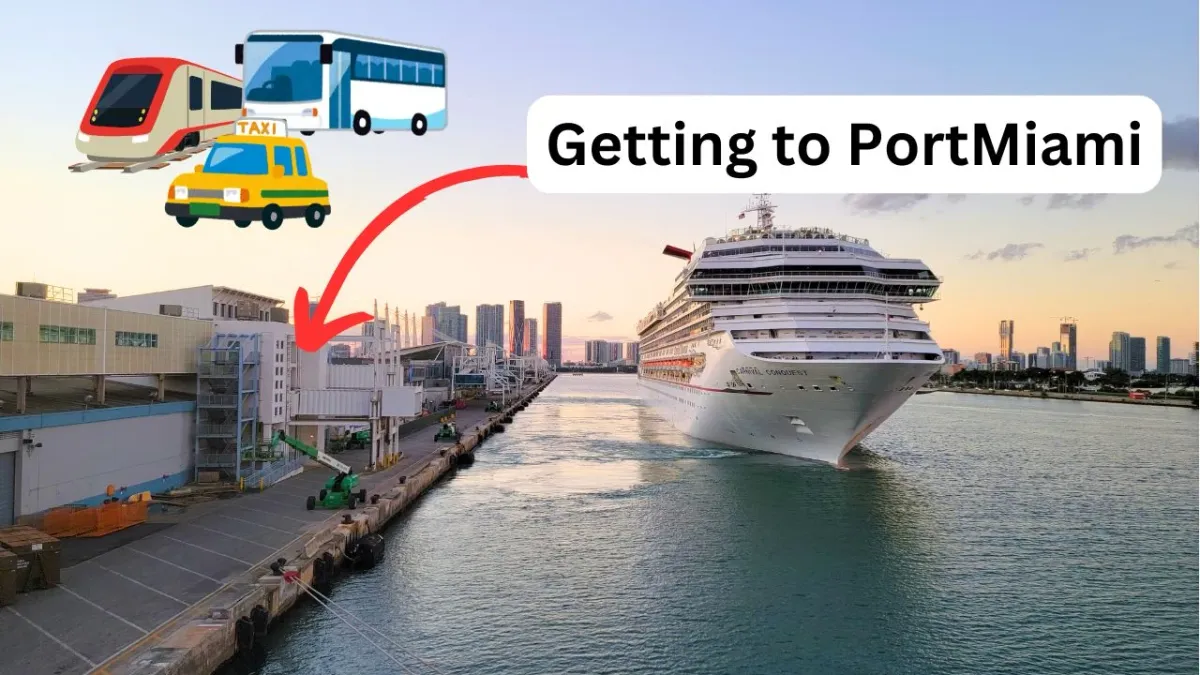
Miami-Dade transportation planners are weighing a new direct rail connection between Miami International Airport (MIA) and PortMiami as weekend traffic congestion around the cruise terminals intensifies and passenger volumes continue to climb.
The concept under review would provide a non-stop train ride into the terminal area, aiming to reduce reliance on cars, taxis, and rideshares on peak embarkation and debarkation days, when multiple ships can turn around at once and backups build quickly on port roads.
Congestion pressures are growing alongside passenger records
PortMiami handled a record 8,564,225 cruise passengers in fiscal year 2025, a 4% increase from the prior year and the highest total in the port’s history. Port Canaveral narrowly surpassed Miami’s passenger figures over the same fiscal year, taking the title of the world’s busiest cruise port, even as Miami continued to post record operations.
Planners and cruise travelers have also been contending with construction activity in downtown Miami and within port areas, which has added detours and slowed vehicle flow on some of the busiest weekends. The result, travelers say, is that even short trips can balloon into hours-long drives when traffic stalls near terminal approaches.
Some passengers have described an under-10-mile (or roughly 10-mile) ride taking nearly three hours, including trips by rideshare from nearby hotels. Others have reported getting out of vehicles and walking the final stretch with luggage to make boarding appointments.
How crowded can a PortMiami weekend get?
On a recent weekend highlighted by cruise line advisories, PortMiami was scheduled to handle 17 cruise ships across two days, bringing heavy passenger turnover along with crew movements, vendors, port employees, and transportation providers operating in the same constrained roadway network.
- Overall weekend volume: 17 ships were scheduled across Saturday and Sunday, with more than 140,000 passengers embarking or debarking across the two days.
- Saturday: Eight ships were scheduled, with an estimated 65,000 cruise guests moving through the port.
- Sunday: Nine ships were scheduled, with passenger movement projected to exceed 75,000 cruise guests.
Ships cited as part of the weekend’s lineup included Icon of the Seas, MSC World America, Scarlet Lady, Symphony of the Seas, Celebrity Beyond, Norwegian Encore, Norwegian Aqua, MSC Divina, Freedom of the Seas, Independence of the Seas, Brilliant Lady, Oceania Allura, and P&O Ventura.
Carnival advisories underline the on-the-ground impact for guests
As congestion worsened, Carnival Cruise Line issued traffic advisories to guests scheduled to board four PortMiami sailings, warning of potential delays tied to heavy traffic and construction impacts near the port.
The notices went to passengers boarding Carnival Magic and Carnival Sunrise on Saturday, March 22, and to guests boarding Carnival Celebration and Carnival Horizon on Sunday. Carnival’s message reminded travelers to arrive during the terminal arrival appointment window selected during online check-in, even if traffic is moving slowly. Each of the four sailings was still scheduled to depart at 3 p.m., and the cruise line indicated the ships were expected to sail on time despite roadway disruptions.
Carnival’s reminders also point to a practical risk for late arrivals: once a ship’s all-aboard time has passed, guests can be denied boarding even if the vessel is still alongside. In those situations, cruise lines generally do not provide refunds or compensation, and any potential reimbursement depends on the terms of a traveler’s insurance policy.
What’s being proposed: a direct MIA-to-PortMiami train
The rail idea being reviewed would create a direct, non-stop link between MIA and PortMiami’s cruise terminal area, with the goal of reducing the number of vehicles cycling through port security checkpoints and terminal access roads during peak windows.
Planners have framed the potential benefit as both operational and traveler-focused: debarking passengers often leave ships in concentrated waves, while rideshare pickup zones and taxi queues can back up inside the port when traffic is heavy. A predictable rail trip could also appeal to some embarking passengers, although many cruisers still prefer to fly into Miami the day before sailing to reduce the risk of missing the ship.
Brightline currently provides passenger rail service to a station near PortMiami, roughly two miles from the terminals, but it does not bring riders directly into the cruise terminal complex. The new concept would aim to close that gap by delivering passengers closer to where ships berth.
Planners have also noted a logistical detail that would still need to be addressed: PortMiami’s terminals stretch across a long corridor, so a rail station inside the port would still require a practical way to move travelers to specific terminals, such as an internal tram or shuttle.
Two concepts under review, with different capacity and cost profiles
Miami-Dade planners are considering two primary approaches for an airport-to-port rail connection.
MetroMover extension
One concept would extend the MetroMover people-mover network by about nine miles, potentially using either the current freight train bridge or the Miami River bridge. Capacity would be limited by vehicle size, with each car carrying about 50 passengers, which could constrain throughput on large turnaround days.
Higher-capacity Metrorail extension
A second concept would extend Metrorail by roughly 10 miles and would require a new bridge over the Intracoastal Waterway. Estimated construction costs are projected at $600 million to $800 million, with annual operating expenses estimated at $9 million to $15 million.
While the higher-capacity approach could move more people per hour than a small-vehicle people-mover, the larger capital budget and bridge construction add complexity, making approvals and financing a key hurdle.
The proposal remains in an early planning phase, and a detailed public statement laying out a final recommendation, timeline, or selected route has not been provided in the information available to cruise travelers so far.
Frequently Asked Questions (FAQs)
Which Carnival ships were included in the PortMiami traffic advisories?
Carnival Cruise Line issued warnings to guests boarding Carnival Sunrise and Carnival Magic on Saturday, March 22, and to guests boarding Carnival Celebration and Carnival Horizon on Sunday, cautioning that construction and heavy traffic could cause delays. All four sailings were still scheduled to depart at 3 p.m.
How many ships were scheduled at PortMiami over the high-traffic weekend?
PortMiami was scheduled to handle 17 cruise ships across the weekend, with eight ships on Saturday and nine ships on Sunday.
What are the two rail options being considered between MIA and PortMiami?
Planners are weighing either a roughly nine-mile MetroMover extension (with limited capacity per car) or a higher-capacity, roughly 10-mile Metrorail extension that would require building a new bridge over the Intracoastal Waterway.
How much is the Metrorail extension estimated to cost?
Projected construction costs are estimated at $600 million to $800 million, with annual operating expenses estimated at $9 million to $15 million.
Would a direct airport-to-port train help embarking passengers or travelers heading to the airport after a cruise?
It could help both, but planners have suggested the most consistent use case may be debarking travelers heading from PortMiami to MIA, when large numbers of passengers leave ships within the same few hours and taxi and rideshare demand is especially concentrated.