MAIB Faults Saga Cruise Ship’s Biscay Storm Planning After 115 Injured
Britain’s accident investigators highlight how rougher seas and an ageing cruise market are driving tougher expectations for voyage planning and onboard care.
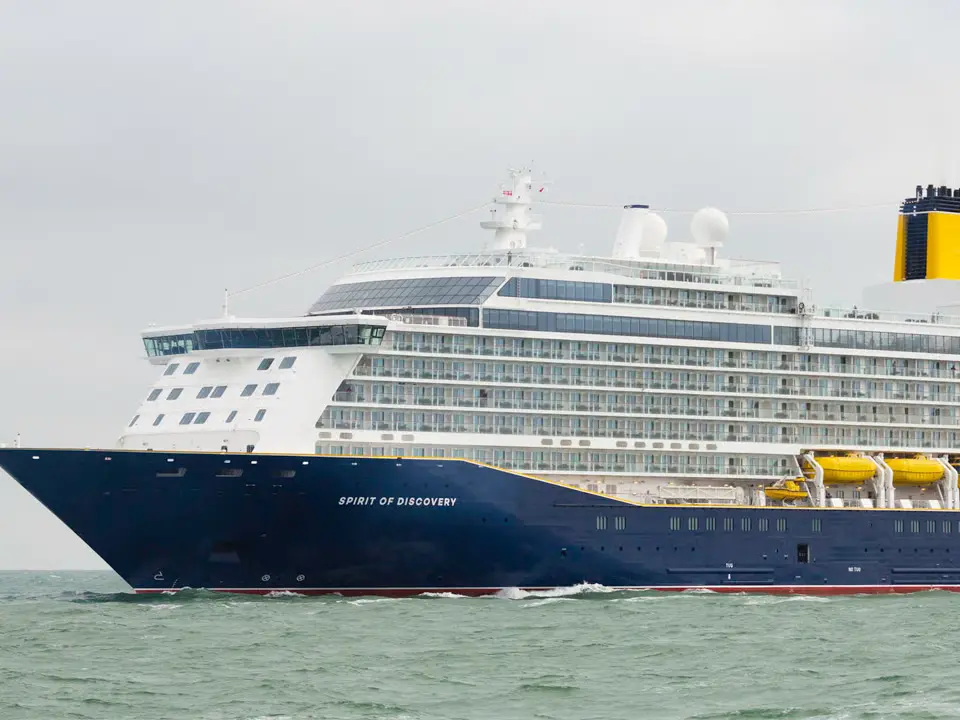
The UK’s Marine Accident Investigation Branch (MAIB) has issued a strongly critical report into a severe weather incident aboard Saga Cruises’ Spirit of Discovery that injured more than 100 passengers and contributed to the death of an 85-year-old passenger. The 56-page investigation, published March 11, 2026, examines voyage planning and onboard response as the ship crossed the Bay of Biscay during a two-week Canary Islands cruise sailing from Portsmouth, England.
MAIB describes “violent motion” and more than 100 injuries
MAIB Chief Inspector Rob Loder said the incident’s impacts were broad and immediate: “Spirit of Discovery’s violent motion in heavy weather caused injury to over 100 passengers and, very sadly, one passenger lost their life as a result of injuries sustained.” He added: “A complex sequence of events led to this accident and we have identified a number of clear lessons around vessel safety, crew decision-making and medical response.”
Spirit of Discovery, a 58,250-gross-ton ship that entered service in 2019, typically carries about 1,000 guests and roughly 500 crew, according to the report. On the voyage in question, MAIB said there were 943 passengers, reflecting Saga’s focus on older travelers.
MAIB cited extreme conditions during the Bay of Biscay crossing, including storm-force winds and wave heights of about 10 meters (32 feet). The agency recorded 115 passengers injured overall, with injuries including fractured hips and ribs, shoulder injuries, head trauma, and spinal damage. Seven other seriously injured passengers were later taken to hospital after the ship returned to the UK.
Passenger Trevor Gilks: fall, suspected spinal injury, and delayed escalation
The passenger who died, Trevor Gilks, was injured when the ship rolled violently and his high-back chair toppled backward, causing him to strike his neck on the floor, MAIB said. He was taken to the ship’s medical center, but investigators scrutinized the care that followed, describing it as “suboptimal” in the context of a suspected spinal injury.
MAIB found the onboard team did not identify the severity of Gilks’ condition and did not place him on a spinal board. An X-ray of his neck was taken onboard and sent to an onshore radiologist, but MAIB said the information available was not sufficient to confirm whether there was a spinal fracture, and additional imaging was not effectively pursued after the inconclusive result.
In its conclusions, the agency said: “Delay in identifying that [Gilks] had suffered a severe spinal injury led to him receiving suboptimal treatment that may have affected the severity of his injury.” Gilks did not reach hospital care until the ship returned to Portsmouth, and he died four days after the injury.
MAIB also addressed why an airlift did not occur, saying helicopter evacuation was not carried out because sea conditions made an air transfer unsafe.
Questions over the decision to cross the Bay of Biscay
Beyond the onboard injuries, MAIB criticized decision-making that left the ship exposed to a forecast period of very high seas. The report said the captain and Saga’s operational teams ashore discussed forecast conditions days before the worst of the storm and made itinerary changes, including dropping a planned final port call in the Canary Islands.
As the voyage continued, the plan changed again after the ship learned that A Coruña, Spain, would be closed due to weather. The captain then chose to sail directly back to Portsmouth, arriving on Nov. 6, 2023. MAIB said the most severe events during the crossing occurred on Nov. 4, 2023.
MAIB concluded that the choice to proceed into the Bay of Biscay in very high waves was “not effectively challenged by the crew and operational teams ashore,” and that weather information providers advised against making the crossing. Investigators also cited inadequate voyage planning and said the ship’s crew did not sufficiently challenge the plan to continue through the storm, based on what MAIB described as optimistic reliance on shipbuilder Meyer Werft’s seakeeping capabilities.
Propulsion interruptions during heavy seas and design concerns
A central technical feature of the incident was the ship’s temporary loss of propulsion in very rough seas off north-west Spain. MAIB said violent motion led to propeller exposure and overspeed events that triggered automatic shutdowns.
Spirit of Discovery uses podded azimuth propulsion. During the storm, MAIB said the pods experienced a series of overspeed and shutdown incidents, and while engineers were often able to restore propulsion within minutes, the repeated interruptions reduced the ship’s maneuvering capability as it was being battered by heavy seas.
MAIB also identified design and documentation issues linked to the propulsion systems, including the low placement of a pod bilge sensor that could trigger shutdowns during minor water ingress. The investigation said incorrect operating instructions prevented officers from recognizing risks linked to overspeed conditions, and it noted the ship had experienced similar technical failures earlier in 2023.
Mass-casualty readiness and onboard hazards in public spaces
MAIB said the high number of injuries was connected not only to the ship’s motion, but also to the reality that many passengers were in public areas, dining venues, and leisure spaces when the ship began rolling violently. Investigators said unsecured furnishings contributed to injuries, and they raised concerns about the suitability of some furniture and interior arrangements for severe weather, including the lack of handholds in elevator lobbies.
The report also concluded the ship’s mass casualty incident plan was not implemented effectively, leaving the medical team overstretched as injuries mounted and contributing to delays in treatment and triage.
Recommendations for operators, regulators, and industry bodies
MAIB issued recommendations aimed at improving voyage planning, heavy-weather passenger protection, and emergency medical readiness. The report also pointed to wider work by regulators on equipment standards, including proposals by the UK’s Maritime and Coastguard Agency, working with Norwegian authorities, for new International Maritime Organization standards for propulsion system manuals and related equipment.
- Improving onboard medical capability, including increasing the availability of medical personnel with Advanced Trauma Life Support qualifications.
- Updating heavy-weather policies for securing furniture and reducing risks from loose or unstable items in public spaces.
- Proposing electronic devices to improve awareness of ship stability and motion, including electronic inclinometers.
- Improving the quality and clarity of equipment instruction manuals, with calls directed toward the IMO and classification societies.
MAIB also emphasized that its investigations are conducted to improve safety and are not written for litigation. The report content is not intended to be used in court proceedings to assign legal liability, and MAIB noted its reports are inadmissible in judicial proceedings intended to attribute liability or blame.
Saga Cruises: condolences, acceptance of recommendations, and disagreements with conclusions
A Saga Cruises spokesperson offered condolences and said the company accepted the report’s recommendations while disputing some conclusions. “Our thoughts remain with the family and friends of Mr Gilks and all the guests and crew affected by this incident, and we are sorry for the distress they suffered,” the spokesperson said.
The spokesperson added: “While we accept the MAIB’s recommendations, we disagree with some of their conclusions and feel the synopsis does not accurately reflect the report.” Saga also said it had already taken steps to strengthen policies and procedures following the incident, actions that MAIB acknowledged in its report.
MAIB’s findings set out follow-up priorities across voyage planning, propulsion guidance and equipment documentation, and onboard medical and passenger-safety protocols for severe weather, as Saga implements changes and regulators consider broader measures affecting passenger vessels.
Frequently Asked Questions (FAQs)
When did the Spirit of Discovery storm incident occur?
MAIB said the most severe events occurred during the Bay of Biscay crossing on Nov. 4, 2023, during a two-week Canary Islands cruise sailing from Portsmouth. The ship returned to Portsmouth on Nov. 6, 2023.
How many passengers were injured during the incident?
MAIB recorded 115 passengers injured overall, with more than 100 receiving medical treatment onboard. The report said seven other seriously injured passengers were later taken to hospital after the ship returned to the UK.
What did MAIB criticize about the onboard medical response?
MAIB concluded there was a delay in identifying that passenger Trevor Gilks had suffered a severe spinal injury, leading to “suboptimal” treatment. The report also said the medical team was overstretched and that the ship’s mass casualty incident plan was not implemented effectively, contributing to delays in treatment and triage.
What were the immediate causes of Spirit of Discovery’s propulsion interruptions?
MAIB said the ship experienced repeated propulsion interruptions as violent motion in heavy seas led to propeller exposure and overspeed events that triggered automatic shutdowns. The report also identified issues including the low placement of a pod bilge sensor that could trigger shutdowns during minor water ingress, as well as operating-instruction problems linked to recognizing overspeed risks.
What safety changes did MAIB recommend for the cruise industry?
Recommendations included improving onboard trauma capability (including Advanced Trauma Life Support-qualified personnel), strengthening heavy-weather furniture securing and passenger safety measures in public areas, and proposals for electronic stability and motion measurement equipment such as electronic inclinometers. The report also referenced work by UK and Norwegian authorities proposing new IMO standards for propulsion system manuals and equipment.