Juneau, Huna Totem Finalize Lease for Aak'w Landing Cruise Dock
As cruise traffic keeps climbing, Juneau is weighing whether new downtown berths and passenger-fee projects can ease crowding without remaking the waterfront for visitors.
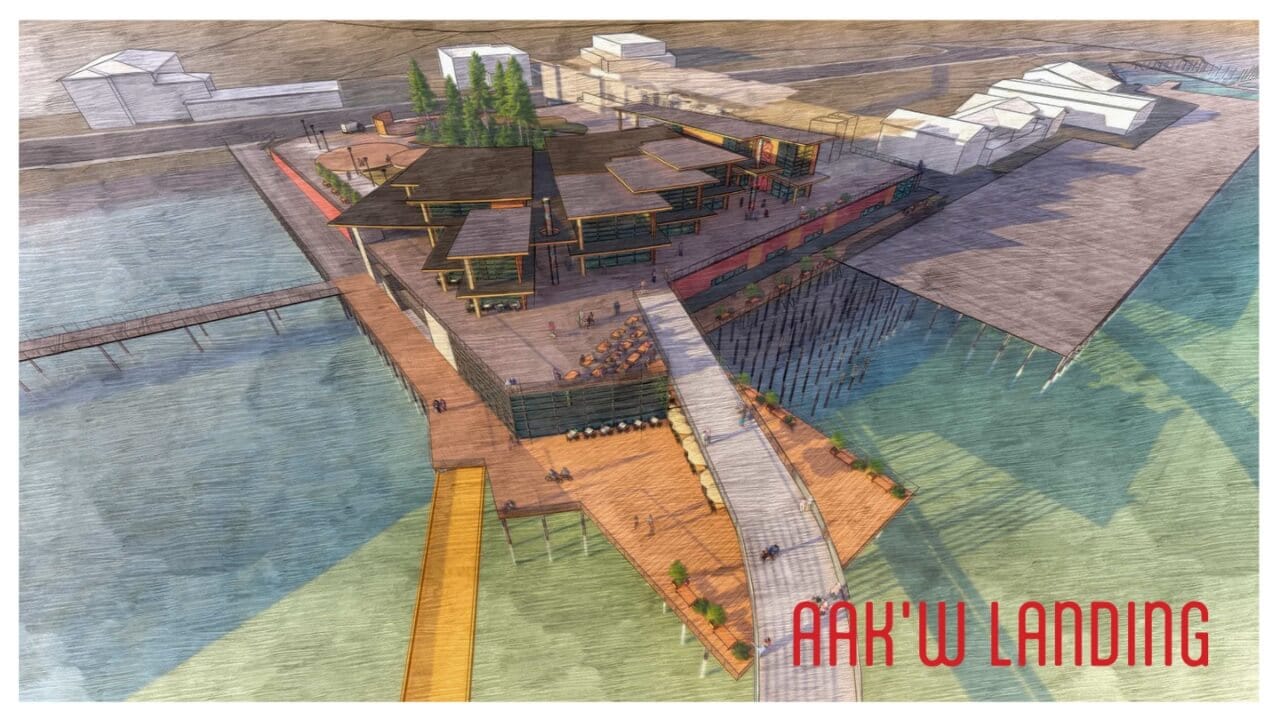
Plans for a fifth cruise ship dock in downtown Juneau moved closer to construction after the City and Borough of Juneau and Huna Totem Corporation finalized a tidelands lease for the Aak’w Landing development.
The lease milestone comes as the city is also seeking public input on how to spend marine passenger fee revenue, estimated at $24.5 million, on projects intended to address tourism impacts and improve local infrastructure.
Tidelands lease clears path for final design and procurement
Huna Totem, the Alaska Native village corporation behind Aak’w Landing, says the completed tidelands lease allows the project to advance from conceptual approvals into final engineering, procurement planning, and construction sequencing. The Juneau Assembly approved the waterfront tidelands lease about a year ago, and the Juneau Planning Commission approved the project in 2023.
“There’s still a lot of detailed engineering and design that needs to happen,” said Susan Bell of Huna Totem, adding that the corporation is taking a step-by-step approach to keep the project moving in order. She said signing the lease supports efforts such as securing steel and obtaining the floating structures needed for the dock.
Construction target: summer 2027 start, 2028 season opening
Huna Totem’s schedule calls for construction to begin in summer 2027, with the dock intended to be ready for the 2028 Alaska cruise season. The corporation has said the timeline depends on completing final design and engineering work, as well as lining up long-lead materials.
The project site is planned along Egan Drive near Juneau’s U.S. Coast Guard station, with the dock in Gastineau Channel.
More than a berth: what Aak’w Landing is planned to include
Aak’w Landing is envisioned as a combined cruise berth and upland waterfront development, with public-facing elements that include dining and retail uses, cultural programming, and community-oriented space along the waterfront. The full development has been estimated at at least $150 million.
- Underground parking: Parking is included in site concepts as part of the broader waterfront development.
- Retail and dining space: Plans include commercial space intended for visitor and community use.
- Culture and science center: The project includes a culture and science center focused on Alaska Native heritage.
- Public waterfront areas: Concepts include a boardwalk and green space designed for events and everyday use.
- Art and educational resources: Alaska Native art and educational elements are included in site concepts.
Huna Totem has described a phased approach, with later phases integrating amenities such as cultural exhibits, retail spaces, and educational programming.
Dock operations, shore power, and berth demand
The new facility is planned with shore power capability, intended to allow vessels to plug in while alongside and reduce emissions during port calls. Supporters have pointed to shore power as a design feature that can help address air quality concerns tied to ship visits.
Huna Totem has said Norwegian Cruise Line Holdings’ brands will have preferential berthing rights at the dock, but the terminal is not planned as an exclusive-use facility. Norwegian Cruise Line Holdings donated a 2.9-acre undeveloped waterfront property to Huna Totem in 2022 after outbidding the City and Borough of Juneau for the site.
Additional downtown berthing capacity is a central argument in favor of the project at a port where limited availability can require ships to tender passengers ashore instead of docking. Juneau is projected to see 95 large cruise ships in 2026, and the schedule includes days when multiple ships are in port at once. As one example of how tight berth availability can become, Grand Princess has announced plans to tender guests ashore during a May 27, 2026 call in Juneau.
Huna Totem has also cited coordination with the U.S. Coast Guard to maximize the site’s utility and efficiency, including occasional provision for icebreaker and support vessel docking.
Support, skepticism, and continued community engagement
Aak’w Landing has been one of Juneau’s most closely watched cruise infrastructure debates, drawing both support and opposition. Huna Totem has argued that a new downtown dock and adjacent visitor area can help distribute passenger flows and reduce pressure on the most congested parts of the existing waterfront.
Opponents have raised concerns that more dock capacity could intensify traffic and add to environmental and health impacts, including air quality issues tied to ship calls.
Bell said Huna Totem intends to keep listening as the project advances. “This was built on years of input,” she said, adding that the corporation plans to maintain an ongoing dialogue with the community.
Huna Totem is scheduled to discuss Aak’w Landing at a Juneau Chamber of Commerce luncheon on May 7. Beyond that event, the corporation has not listed additional public listening sessions in the near term.
Huna Totem CEO Russell Dick has framed the development as both a visitor facility and a community space. “The project creates a welcoming space to share our culture,” Dick said, adding that it is intended to support local businesses and community use along the downtown waterfront.
Juneau seeks public input on marine passenger fee spending
Separately from the dock project, Juneau is collecting public feedback on proposed projects funded by marine passenger fees, a $13 per-passenger charge paid by cruise visitors. The city expects 1.69 million cruise visitors for the 2026 season.
The restricted municipal funds are intended for infrastructure projects that benefit both visitors and residents. Proposed initiatives include expanding downtown public restrooms, extending the seawalk, and supporting Juneau Mountain Rescue operations.
Alix Pierce, Juneau’s visitor industry director, said recurring requests for more downtown restrooms frequently appear in public feedback. The comment period closes on May 3, after which the Juneau Assembly will decide which projects to fund.
City officials have also pointed to legal limits on how the revenue can be spent, based on a 2019 lawsuit settlement with the cruise industry.
Other cruise port proposals in play
Aak’w Landing is not the only cruise infrastructure concept under discussion in the Juneau area. Goldbelt Incorporated has proposed a new cruise ship port on the backside of Douglas Island and submitted a conditional-use permit application to the city in February. The proposal would still require review and approvals by the Juneau Planning Commission and the Juneau Assembly.
With the tidelands lease finalized, Huna Totem’s next milestones center on completing final design work and construction planning, while Juneau’s Assembly faces near-term decisions on passenger-fee-funded projects following the May 3 public comment deadline.
Frequently Asked Questions (FAQs)
When is the Aak’w Landing cruise dock expected to open?
Huna Totem’s current schedule targets a summer 2027 construction start, with the dock intended to be ready for the 2028 Alaska cruise season.
Where will the new dock be located?
The dock is planned for downtown Juneau in Gastineau Channel, paired with an upland development along Egan Drive near Juneau’s U.S. Coast Guard station.
Will the dock be exclusive to one cruise company?
Norwegian Cruise Line Holdings’ brands are expected to have preferential berthing rights, but Huna Totem says the dock is not planned as an exclusive-use terminal.
Will Aak’w Landing have shore power?
Yes. The project’s design includes shore power capability, intended to allow ships to plug in while alongside and reduce emissions during port calls.
How can Juneau residents share input on marine passenger fee projects?
Residents can submit comments on proposed projects until May 3 via email to Alix Pierce at alexandra.pierce@juneau.gov or through the Marine Passenger Fee Program website.