Fincantieri Posts Record €117m Profit as Cruise Orders Fill Yards
Fincantieri’s results underline how cruise lines are locking in scarce shipyard slots far into the next decade, giving European builders and suppliers rare long-term visibility.
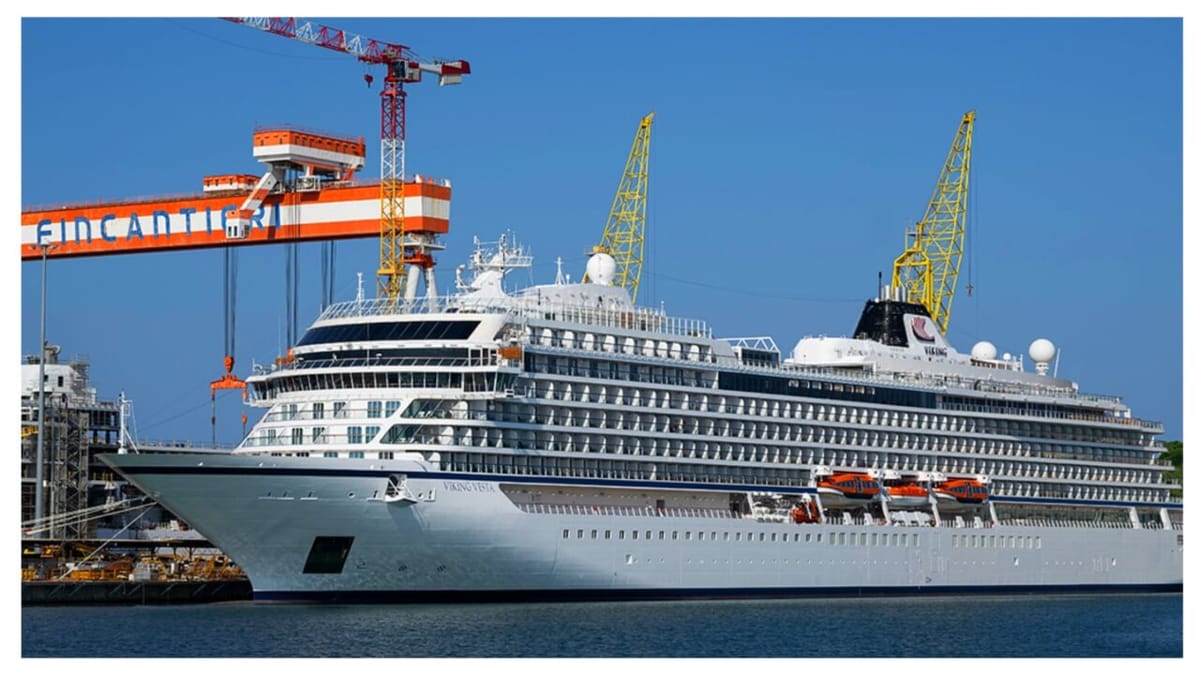
Fincantieri posted its highest net profit in company history in 2025, reporting €117 million as cruise shipbuilding helped lift revenue and keep its yards operating at full utilization, the Italian shipbuilder said.
The company said revenue rose 13% to nearly €9.2 billion, while profitability improved further when adjusted for nonrecurring items, with net profit of €143 million on that basis. Fincantieri also ended the year with a €63.2 billion backlog extending to 2037, supported by new cruise orders across multiple market segments.
Record results in 2025, with higher margins and lower leverage
Fincantieri said its 2025 performance included stronger operating profitability and reduced net debt during the year. EBITDA rose 34% year over year and the EBITDA margin improved to 7.4%, up from 6.3% in 2024.
- Net profit: €117 million (or €143 million adjusted for nonrecurring items), about four times higher than in 2024.
- Revenue: Nearly €9.2 billion, up 13% year over year.
- EBITDA margin: 7.4%, up from 6.3% in 2024.
- Leverage ratio (net debt/EBITDA): 2.7x, or 1.9x on adjusted EBITDA.
- Order intake: €20.3 billion, more than 32% above the prior record set in 2024.
- Order backlog: €63.2 billion.
Net debt declined during the year, and the company said its leverage ratio came in better than the guidance it had previously outlined at its Capital Markets Day in February, when it projected 2.8x (or 2.0x on adjusted EBITDA).
Fincantieri Chief Executive Officer and Managing Director Pierroberto Folgiero said: “We are very pleased with the record results achieved in 2025 in economic, financial and commercial terms, even in a complex global environment.”
Cruise shipbuilding drove a large share of growth
Fincantieri’s cruise segment generated €4.4 billion in revenue in 2025, a 12.5% increase from 2024, as shipyard capacity remained fully utilized, the company said. The company described demand as strong, with orders spread across product categories and a mix of large and luxury tonnage.
Fincantieri also pointed to broader industry activity during 2025, when 23 cruise ship contracts were finalized globally, with options for another 16 units.
Cruise orders cited for 2025 spanned mass-market to luxury
Among the cruise orders Fincantieri cited for 2025 were agreements covering multiple brands and segments:
- Norwegian Cruise Line: Four “maxi” ships.
- Viking: Four ships.
- Crystal: Two ships.
- TUI Cruises: Two ships.
- AIDA Cruises: Two ships.
- Four Seasons Yachts: One ship.
- Regent Seven Seas Cruises: One ship.
Backlog extends to 2037 as deliveries continue
Fincantieri delivered 24 vessels in 2025 and ended the year with 97 ships in its orderbook, with deliveries scheduled through 2037. The company said order intake totaled €20.3 billion, driven by 42% growth in shipbuilding orders.
Folgiero said the orderbook provides long-range visibility for operations and suppliers, adding that the 97 vessels through 2037 “ensure extremely robust operational prospects for our shipyards, structurally strengthening our competitive positioning and that of our supply chain, particularly in the cruise segment.”
Norwegian Cruise Line Holdings adds three more newbuilds at Fincantieri
Norwegian Cruise Line Holdings reached an agreement with Fincantieri for three additional cruise ships, one each for Norwegian Cruise Line, Oceania Cruises and Regent Seven Seas Cruises. The ships are scheduled for delivery between 2036 and 2037 and will be built at Fincantieri shipyards in Italy.
NCLH said each vessel is tied to an existing or previously announced ship class: the Oceania ship will be a sister to Oceania Sonata, the Regent ship will be a sister to Seven Seas Prestige, and the Norwegian Cruise Line ship will be a sister to a previously announced Norwegian Cruise Line newbuild order.
John W. Chidsey, president and chief executive officer of Norwegian Cruise Line Holdings, said: “Together with Fincantieri, a trusted partner for decades, we continue to advance a disciplined approach to fleet growth that builds on the strength of our brands, defines the future of cruising and elevates the guest experience for years to come.”
NCLH said it expects to fund most of the ships’ cost through Export Credit Agency financing once the vessels are delivered. Following the agreement, the company said it has 17 ships on order across its three brands: eight for Norwegian Cruise Line through 2037, five for Oceania through 2037, and four for Regent scheduled through 2036.
Industry orderbook points to steady ship deliveries into the 2030s
Cruise lines are expected to spend about $80 billion on new ships over the next decade, based on the Cruise Industry News global cruise ship orderbook update. That orderbook lists 79 newbuilds scheduled for delivery by 2037, representing nearly 205,000 additional berths.
Those new ships average 115,486 tons and about 2,586 passengers, with an average cost of roughly $1 billion, according to the orderbook. The 2026 intake alone includes 13 ships, including Norwegian Luna, which was recently handed over by Fincantieri.
Other ships slated for 2026 deliveries include Royal Caribbean International’s Legend of the Seas, a 250,800-ton Icon-class ship under construction at Meyer Turku that is set to become the third ship in the Icon-class series. The 2026 delivery lineup also includes new ships for MSC Cruises, TUI Cruises, Viking and Adora Cruises, along with smaller luxury and niche vessels, with examples cited including Viking Mira, Viking Libra, Orient Express Corinthian and Magellan Discoverer.
Looking further ahead, the orderbook points to 15 ship deliveries in 2027, while recent orders have secured shipyard slots well into the next decade. The same update also cited long-range commitments such as NCLH’s 2036 to 2037 order at Fincantieri and MSC Cruises’ agreement with Meyer Werft for four large ships to be built between 2030 and 2034.
2026 targets reaffirmed as capacity plans evolve
Fincantieri confirmed its 2026 targets presented at its Capital Markets Day, including expectations for higher net profit than in 2025 and revenue in a range of €9.2 billion to €9.3 billion. The company also reiterated plans to reduce leverage to about 2.0x, or 1.3x when including the capital increase completed in February.
Beyond cruise, the company said it is seeking to capture additional defense demand tied to higher NATO-related spending by doubling production capacity at its Italian yards. Its business plan also includes reallocating part of cruise-related workload to Romania.
With a backlog extending to 2037 and additional cruise orders already arriving in 2026, Fincantieri is entering the new year with long-term shipyard activity in place, alongside stated targets for improved profitability and lower leverage.
Frequently Asked Questions (FAQs)
What were Fincantieri’s key achievements in 2025?
Fincantieri reported a record net profit of €117 million in 2025, or €143 million adjusted for nonrecurring items, alongside a 13% revenue increase to nearly €9.2 billion. The company reported an EBITDA margin of 7.4% and a leverage ratio (net debt/EBITDA) of 2.7x, or 1.9x on adjusted EBITDA, and closed the year with €20.3 billion in order intake and a €63.2 billion backlog.
How large is Fincantieri’s backlog and how far does it extend?
Fincantieri’s order backlog totals €63.2 billion, and its orderbook includes 97 vessels with deliveries scheduled through 2037.
When will Norwegian Cruise Line Holdings’ newly announced ships be delivered, and how does it expect to finance them?
NCLH’s agreement with Fincantieri covers three ships scheduled for delivery between 2036 and 2037, one each for Norwegian Cruise Line, Oceania Cruises and Regent Seven Seas Cruises. NCLH said it expects to fund most of the ships’ cost through Export Credit Agency financing once the vessels are delivered.
What is the projected cruise ship investment over the next decade?
Based on a Cruise Industry News global cruise ship orderbook update, cruise lines are expected to spend about $80 billion on new ships over the next decade. The orderbook lists 79 newbuilds scheduled for delivery by 2037, representing nearly 205,000 additional berths, with an average new ship of 115,486 tons, about 2,586 passengers, and an average cost of roughly $1 billion.
Which cruise ships are scheduled for delivery in 2026?
The Cruise Industry News orderbook update cited 13 ships scheduled for delivery in 2026. Examples mentioned include Norwegian Luna, which was recently handed over by Fincantieri, and Royal Caribbean International’s Legend of the Seas, a 250,800-ton Icon-class ship being built at Meyer Turku, as well as ships such as Viking Mira, Viking Libra, Orient Express Corinthian and Magellan Discoverer, plus additional deliveries slated for cruise lines including MSC Cruises, TUI Cruises and Adora Cruises.