Extinction Rebellion Protest Delays Celebrity Eclipse Docking in Amsterdam
The Amsterdam protest highlights persistent clashes between environmental groups and the cruise industry, as cities and operators face mounting demands for greener tourism policies.
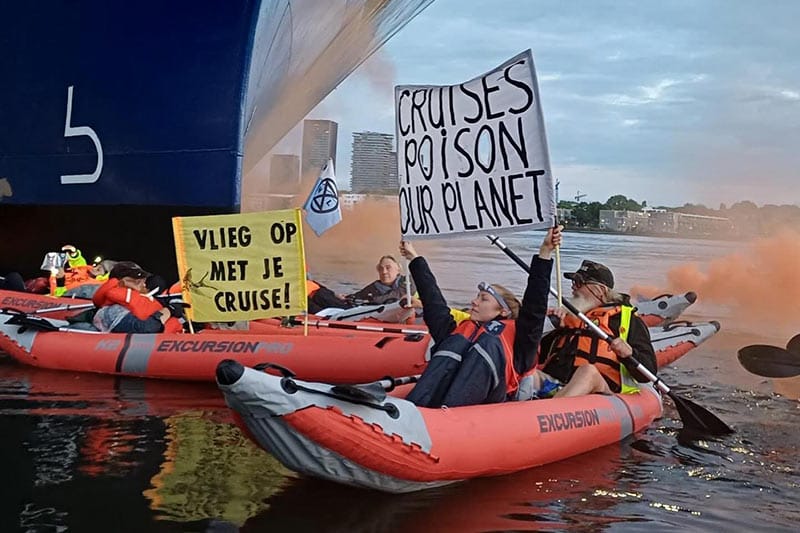
An environmental protest organized by Extinction Rebellion disrupted operations at the Amsterdam Cruise Terminal early on July 27, 2025, delaying the docking of _Celebrity Eclipse_, a 121,878-gross-ton cruise ship carrying approximately 2,850 passengers and 1,200 crew members. The protestors, numbering about 30, used small boats, kayaks, and inflatables to block the vessel’s approach, delaying disembarkation for about two hours before police intervened to clear the waterway.
Details of the Protest and Police Response
The action began between 4:00 and 4:30 a.m., ahead of the ship’s scheduled 6 a.m. arrival at the Passenger Terminal Amsterdam. Protesters displayed banners reading “Cruising is cringe” and “Cruise is polluting our planet,” criticizing the environmental consequences of large cruise ships. The police responded by deploying boats to disperse the activists, arresting five individuals who refused to leave or provide identification. Activists alleged that police vessels struck some of their inflatables during the operation, though no injuries were reported. Two of the arrested individuals were released shortly after the event.
Following the incident, which delayed operations for approximately two hours, _Celebrity Eclipse_ was able to dock and resume its itinerary. According to reports, the ship had been returning from an 11-day cruise at the time of the protest.
Extinction Rebellion’s Environmental Concerns
Extinction Rebellion described cruise ships as “floating environmental disasters” and condemned their effects on air quality, marine ecosystems, and coastal communities. In a statement posted to social media, the group explained: “We protest with this blockade against the harmful influence of cruise ships on humans, nature, and the climate. They should not be allowed in Dutch waters.” The activists are calling for strict national and international environmental standards, stronger enforcement measures, and, ultimately, the banning of cruise ships in Amsterdam and across the Netherlands.
This action follows a series of similar demonstrations. In 2024, Extinction Rebellion disrupted multiple cruise itineraries by blocking access to Amsterdam's port locks. These protests have increased tensions between the cruise industry and environmental campaigners, with activists vowing to continue their actions until their demands are addressed.
Safety Risks Highlighted by Authorities
The Port of Amsterdam expressed concerns over the safety risks posed by small vessels operating in close proximity to large cruise ships such as the 315-meter _Celebrity Eclipse_. A port spokesperson emphasized the hazards of propellers and bow thrusters, which create powerful underwater forces that could endanger nearby smaller boats. Maritime authorities reiterated that protests near large vessels can compromise navigational safety and called for heightened vigilance during such incidents.
Amsterdams Evolving Cruise Tourism Policies
The protest underscores ongoing tensions surrounding Amsterdam’s approach to cruise tourism. The city has already capped annual cruise calls at 100 and has announced plans to relocate its passenger terminal outside the city center. By 2027, only ships equipped with shore power capability, which reduces emissions during port calls, will be permitted to dock at Amsterdam, reflecting broader efforts to manage congestion and environmental impact.
Despite these measures, cruise passengers represent a small proportion of Amsterdam’s overall tourism, just 1.5 percent of a total forecast to exceed 20 million annual visitors in coming years. While the cruise sector has been targeted as part of efforts to address overtourism, experts note that eliminating cruise arrivals would have a limited effect on total visitor numbers. Nevertheless, the growing emphasis on sustainability reflects widespread concern over the environmental footprint of the tourism industry.
Cruise Industry Efforts and Environmental Challenges
In response to mounting criticism, the cruise industry has introduced initiatives to mitigate its environmental impact. Efforts include investments in alternative fuels, upgrades to shore power facilities, and the adoption of energy-efficient technologies. Many operators, including Celebrity Cruises, have pledged to achieve carbon neutrality by 2050. However, environmental groups argue these measures remain insufficient, pointing to ongoing protests as evidence of dissatisfaction.
Celebrity Cruises acknowledged the delay caused by the demonstration, but stated that the ship continued its itinerary as planned. The broader cruise sector continues to grapple with balancing economic contributions to local economies against increasing regulatory, community, and activist pressure to enhance environmental standards.
Frequently Asked Questions (FAQs)
Why did activists target _Celebrity Eclipse_ in Amsterdam?
The protest was organized by Extinction Rebellion to highlight the environmental and social impacts of cruise ships, including air pollution, greenhouse gas emissions, and detrimental effects on coastal ecosystems. The group is demanding stricter environmental regulations and the phasing out of cruise tourism in Dutch waters.
How long was the ship delayed?
The blockade lasted approximately two hours, delaying the disembarkation process while police worked to clear the waterway.
What safety risks were highlighted during the protest?
Authorities warned that small boats operating near large vessels face significant hazards from propulsion systems, including propellers and bow thrusters, which create dangerous conditions. The proximity of kayaks and inflatables to a 315-meter cruise ship like _Celebrity Eclipse_ posed serious navigational safety concerns.
What actions is Amsterdam taking to regulate cruise tourism?
Amsterdam has capped cruise ship arrivals at 100 per year, with plans to relocate the city’s central passenger terminal. By 2027, only ships with shore power capabilities will be allowed to dock, reducing emissions while at berth.
How is the cruise industry addressing environmental criticism?
Cruise companies are investing in cleaner technologies, including alternative fuels, shore power infrastructure, and more sustainable ship designs. They have also established long-term goals, with many committing to achieve carbon neutrality by 2050. However, environmental groups argue these efforts remain inadequate to address the sector’s full impact.