European River Cruise Passengers Rise 8% to 1.49M in 2024
As post-pandemic demand normalizes, river operators are leaning on higher-spending long-haul guests and new premium ships, a mix that could speed consolidation.
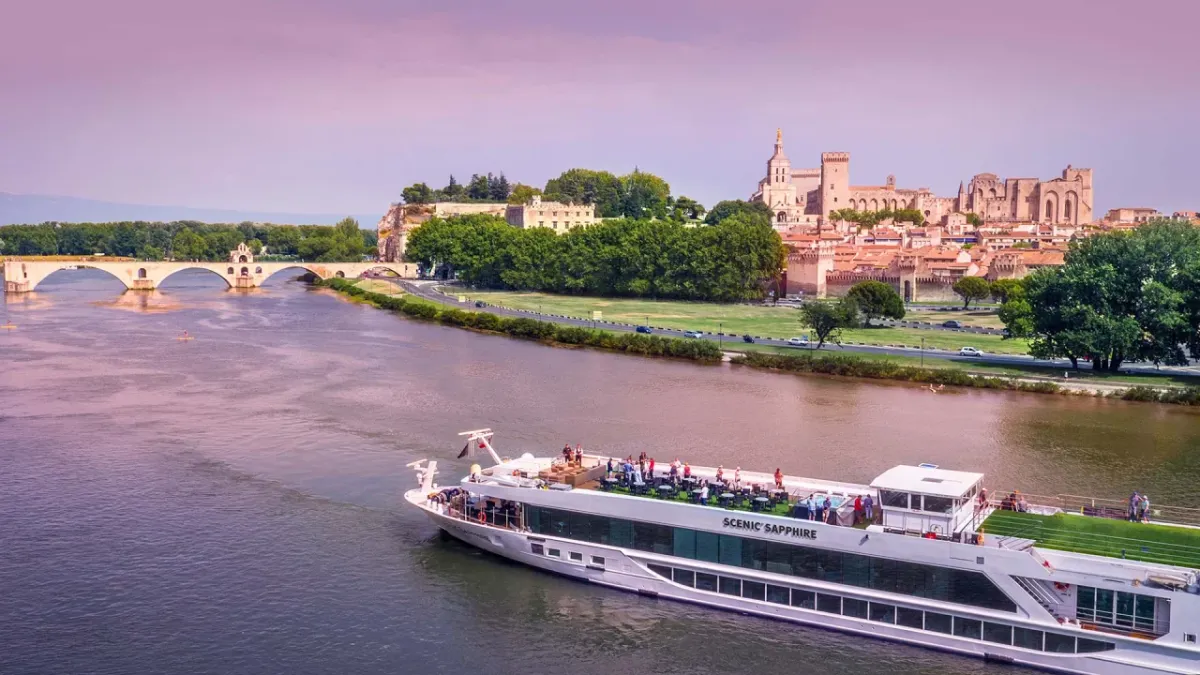
European river cruise passenger volumes rose 8 percent in 2024 to 1.49 million travelers, according to a new market study by IG River Cruise produced with Centouris at the University of Passau. The research also recorded a 5 percent increase in revenues to 3.728 billion euros, signaling continued momentum even as post-pandemic “catch-up” demand begins to level out.
The study was based on interviews carried out in December and January, and it was completed before more recent geopolitical developments that could affect travel patterns.
Demand indicators point to continued expansion
In addition to passenger and revenue totals, the research tracked passenger nights sold on Europe’s rivers as another measure of demand. It found 10.72 million passenger nights were sold in 2025, up 5 percent compared with 2024.
- Passenger growth: The study measured 1.49 million passengers in 2024, an 8 percent year-over-year increase across the European river cruise market.
- Revenue growth: Revenues climbed to 3.728 billion euros in 2024, up 5 percent, as pricing and product mix continued to support topline performance.
- Passenger nights: Demand translated into 10.72 million passenger nights sold in 2025, a 5 percent increase versus 2024, according to the researchers.
IG River Cruise and Centouris described a market that is still expanding, while noting that the fastest rebound years immediately after COVID-era disruptions have passed.
Who is traveling, and who is spending
The study identified Germany, Austria and Switzerland as the largest source markets by passenger volume, totaling 587,000 passengers. The USA and Canada followed closely with 545,000 guests.
Revenue rankings diverged from passenger totals. North America led cruise-only revenues at 2.02 billion euros, while Germany, Austria and Switzerland generated 767 million euros despite higher passenger numbers. Australia and New Zealand ranked third by revenue, producing 346 million euros from 91,000 passengers.
Pricing data showed a continued gap between overseas and European guests, although the study said it has narrowed compared with earlier years. The average cruise-only price in 2025 was 3,671 euros for travelers coming from outside Europe, compared with 1,554 euros for European passengers.
The researchers linked part of the difference to itinerary length and product mix: overseas travelers averaged eight nights in 2025, while European passengers averaged 6.5 days, and luxury and ultra-luxury offerings were particularly dominant in distant source markets.
From 2023 to 2025, the study found the average price paid by overseas travelers declined from 4,023 euros to 3,671 euros. Over the same period, the average price for European guests rose from 1,262 euros to 1,554 euros.
Fleet growth and where new capacity is headed
The study counted 386 river cruise vessels operating in Europe during 2025. It put the average vessel age at 16 years and said the total fleet was up by 18 ships compared with the prior year.
On the forward schedule, the researchers said 16 new vessels with 2,622 beds are expected to enter service this year. A further 19 vessels, with capacity for up to 2,823 guests, are scheduled for 2027.
Looking longer term, close to 60 additional river vessels are due for delivery on Europe’s rivers through the early 2030s, with most of that incoming capacity concentrated on the region’s busiest corridors.
- Rhine/Main/Danube system: The study said 33 ships are slated for the Rhine/Main/Danube network, underscoring that the largest share of new capacity is aimed at the core corridors.
- Danube-only deployments: Three ships are intended to operate exclusively on the Danube, according to the forward delivery schedule cited in the report.
- French rivers: Five ships are planned for French rivers, and the study characterized France as a region with notable room for expansion because it is not as intensively served as the Rhine and Danube networks.
- Douro: Only three ships are scheduled for the Douro through the early 2030s, which the researchers linked to a market they said has reached a degree of saturation.
Operators are also advancing their own fleet plans. Viking has launched Viking Eldir and has 22 river vessels set to be delivered by 2028. TUI River Cruises has announced two methanol-powered ships for delivery by 2028, which it said will grow its fleet to ten vessels. Transcend Cruises is also planning to double its fleet by 2028, focusing on the group and charter market with ship designs tailored to that segment.
Sustainability readiness, and where gaps remain
The market study examined operational sustainability options, with operators representing just over half of the European fleet responding to that portion of the research. The survey covered 211 vessels.
Among the ships included, the researchers found relatively high readiness for alternative fuels, along with broad adoption of shore power connections and advanced wastewater treatment systems. At the same time, the study highlighted limits in electric-only operation and mixed results on emissions compliance.
- Alternative fuels and electrification: The researchers found 78 percent of surveyed vessels can operate on biofuels and 58 percent can operate on synthetic fuels, while only 1 percent can run exclusively on electric power.
- Port and onboard systems: Shore power receptivity was near-universal at 98 percent, and 97 percent of surveyed vessels reported advanced wastewater treatment systems onboard.
- Emissions controls: The study found 40 percent of surveyed vessels meet Stage III NOx limits published by the IMO, and it said catalytic reduction systems remain uncommon, with 11 percent of surveyed vessels equipped with that technology.
Product shifts aimed at new audiences
Operators are also adjusting onboard and shore-side offerings as they try to broaden demand, including targeting younger passengers and ocean cruisers accustomed to large-ship amenities.
Celebrity Cruises is entering river cruising with plans to launch its first two river ships in 2027, highlighting onboard features such as eight dining venues, infinity pools, and shore excursions designed to stand out in the segment. Viva Cruises is introducing new itineraries including Venetian Lagoon routes, expanding beyond the heavily traveled Rhine, Danube, and Seine rivers.
Other companies are refining excursion lineups to widen appeal. Avalon Waterways and AmaWaterways have been developing activities such as castle tours and artisan-led workshops, positioning shore programs as a key part of the experience.
Port access and congestion pressures
As capacity grows, the study and operators have also pointed to the operational reality of port constraints on popular rivers. Amsterdam is implementing measures to halve river cruise calls to docks near the central train station, citing infrastructure constraints.
Some operators are responding by developing alternative stops to spread demand. Avalon Waterways has been working on smaller, less-traveled destinations such as Ybbs an der Donau, an approach it has positioned as a way to ease pressure on heavily visited ports including Melk and Dürnstein.
2026 outlook: operators expect further gains
In operator sentiment for the year ahead, IG River Cruise and Centouris found that 87.5 percent of participating companies reported passenger growth from 2024 to 2025. For 2026, 75 percent forecast additional passenger increases, while the remainder expected stable volumes.
Revenue expectations were stronger than volume expectations, with about 83 percent of responding operators anticipating higher revenue in 2026. The study said the most pronounced gains are expected to come from overseas markets, while European source markets are projected to continue growing but with more uneven performance across segments.
The researchers also said growth appears to be concentrating among larger operators, while smaller companies are planning more cautiously, a pattern they said could indicate further consolidation over the longer run. With new ship deliveries planned over the next several years, the study said the market’s next phase is likely to be shaped by how operators balance expansion with port access, pricing, and sustainability upgrades.
Frequently Asked Questions (FAQs)
How many passengers took a European river cruise in 2024?
The IG River Cruise and Centouris study found 1.49 million passengers cruised on Europe’s rivers in 2024, an 8 percent increase year over year.
How many new river ships are being planned in Europe?
The study said close to 60 additional river vessels are due for delivery on Europe’s rivers through the early 2030s. In the near-term schedule, it also cited 16 new vessels with 2,622 beds expected to enter service this year and another 19 vessels, with capacity for up to 2,823 guests, scheduled for 2027.
Which source markets generated the most river cruise revenue, and why?
The study found the USA and Canada led cruise-only revenues at 2.02 billion euros, ahead of Germany, Austria and Switzerland at 767 million euros despite higher passenger volume. It linked the revenue gap to longer average itineraries for overseas travelers (eight nights in 2025 versus 6.5 days for European passengers) and to a product mix that skewed more heavily toward luxury and ultra-luxury in distant source markets.
How prepared is the European river fleet for alternative fuels and shore power?
Among 211 surveyed vessels, 78 percent could operate on biofuels and 58 percent could operate on synthetic fuels, while 98 percent could connect to shore power. The study also found 97 percent had advanced wastewater treatment systems, but only 1 percent could run exclusively on electric power.
Will river cruising risk overcrowding popular ports?
Port congestion and access constraints are emerging issues in some destinations. Amsterdam is implementing measures to halve river cruise calls to docks near the central train station due to infrastructure constraints, while some operators, including Avalon Waterways, are developing smaller alternative stops such as Ybbs an der Donau to help distribute traffic away from heavily visited ports like Melk and Dürnstein.